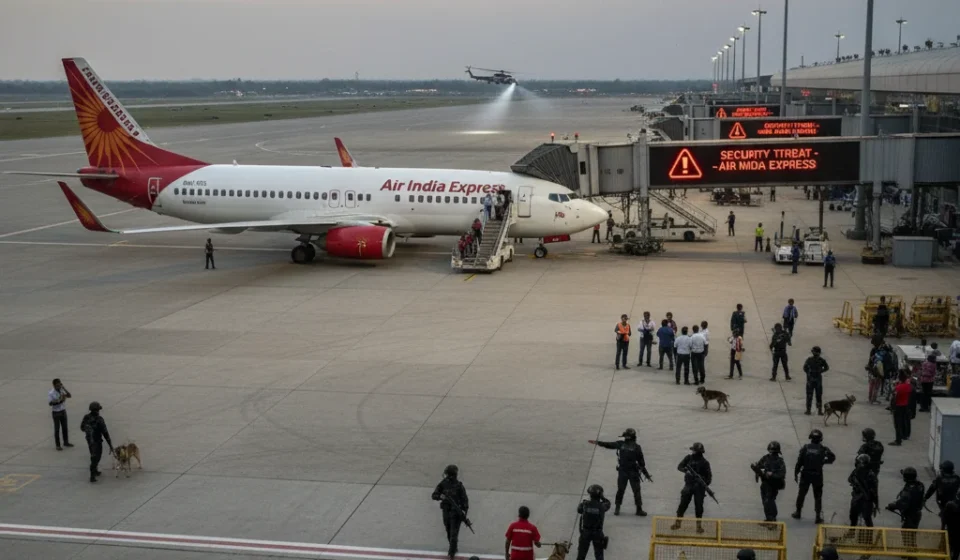

An emergency diversion of an Air India Express flight triggered an immediate security response this week, setting off strict anti-terror protocols both in the air and on the tarmac. Flight crew members diverted the aircraft to the nearest designated airport after receiving a direct bomb threat, touching down under emergency clearance before taxying directly to an isolated bay.
Emergency teams surrounded the plane within minutes. First responders, armed Central Industrial Security Force personnel, and bomb disposal squads cordoned off the tarmac while ground staff guided passengers off the jet through mobile stairs.
The Anatomy of an Isolation Bay Response
Standard operating procedures for mid-air bomb alerts are rigid. When a pilot receives credible threat information from air traffic control or airline dispatchers, the aircraft enters an emergency phase known as ‘Condition Red’. Pilots must balance passenger safety with the tactical need to land without causing panic in the cabin.
Once on the ground, airport operations shift rapidly into crisis management:
- The plane is routed to an isolated parking stand, located at a safe distance from active runways and terminal buildings.
- Passengers and crew evacuate calmly, leaving all cabin baggage behind to prevent tampering with potential devices.
- Bomb Detection and Disposal Squads (BDDS), alongside sniffer dog units, systematically sweep the passenger cabin, galleys, lavatories, and cargo holds.
- Every piece of checked-in luggage and cargo undergoes secondary X-ray scanning and physical checks before release.
Each sweep takes hours. Security personnel leave nothing to chance, carefully verifying every millimeter of the fuselage. In this latest incident, technicians spent over four hours combing through luggage containers before authorities officially declared the aircraft clear of explosives.
Tracing Digital Footprints and Cyber Threat Origins
While ground crews secured the physical aircraft, police and cybercrime investigators began working to trace the origin of the threat. In recent months, dozens of Indian carriers have faced a wave of anonymous threats posted on social media platforms or dispatched through encrypted email relays.
Investigators are analyzing IP addresses, VPN logs, and virtual metadata associated with the accounts used to broadcast the warning. Law enforcement officials confirmed that requests for user data have been routed to major tech platforms, while intelligence agencies coordinate across state borders to spot patterns in the digital phrasing.
A senior police investigator noted that many recent hoax messages rely on burner accounts and disposable routing nodes. Even so, cyber forensic units frequently track digital trails back to source devices through overlooked timing markers and network provider records.
Financial Toll and Tightening Legal Repercussions
Hoax threats are far from victimless pranks. The ripple effects of a single diverted commercial flight disrupt entire operational networks, forcing airlines to absorb massive financial hits.
A diversion burns thousands of liters of aviation turbine fuel, requires unscheduled landing and parking fees, and often forces carriers to arrange hotel stays or alternate flights for stranded travelers. Crew duty-time limitations can ground planes for an entire day, stranding subsequent legs across multiple cities.
Industry analysts estimate that a single unscheduled wide-body or narrow-body diversion costs airlines tens of thousands of dollars. The cumulative loss across multiple false alarms quickly runs into millions.
To combat this wave, authorities are applying the full weight of civil aviation safety legislation. Suspects identified in threat cases face charges under the Suppression of Unlawful Acts Against Safety of Civil Aviation Act. Convictions carry harsh prison sentences and heavy fines.
Regulatory Push for Stricter Deterrents
The Ministry of Civil Aviation and law enforcement bodies are currently pushing for legislative amendments that would make the penalties for aviation hoaxes even more severe. Under proposed updates, individuals caught issuing fake security alerts will automatically be placed on the national no-fly list, banning them from commercial air travel for extended periods or for life.
Aviation security experts emphasize that while false alarms drain resources, security agencies cannot afford to treat any threat casually. SOPs must be executed every single time with the same intensity.
For travelers caught in these diversions, the delays are frustrating. Yet the rigorous protocols demonstrate the speed and thoroughness of modern airport defenses, designed to keep civil aviation safe against any potential hazard.