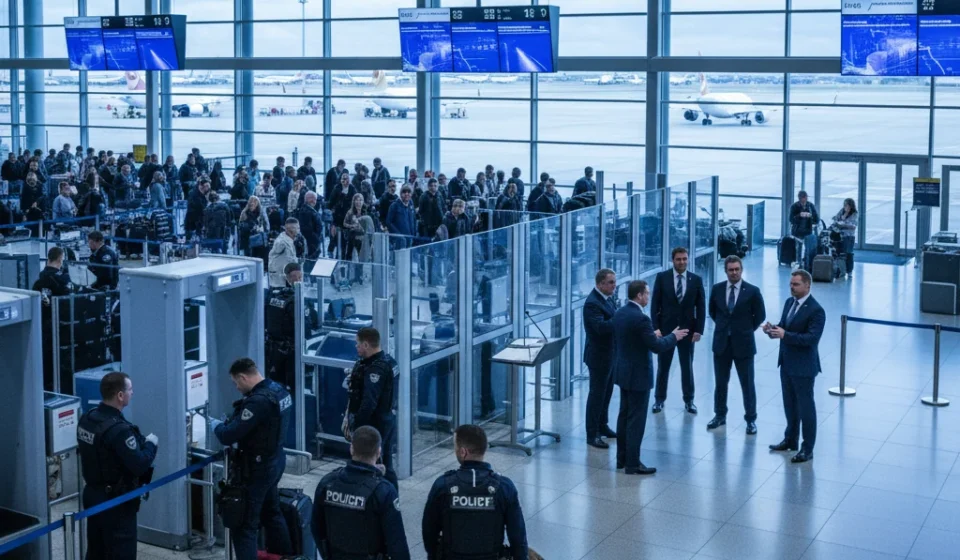

Aviation regulators have rolled out stricter threat-evaluation guidelines across domestic and international operations following the emergency diversion of an Air India Express flight. The scheduled service was forced to make an unscheduled landing after ground teams received an anonymous threat, triggering full emergency protocols, passenger evacuations, and hours of security checks before investigators declared the alert a hoax.
The incident is the latest in a wave of digital threats aimed at commercial airlines. While none of the recent alerts have yielded actual explosives, the operational disruption has forced authorities to re-examine how they evaluate incoming warnings without compromising passenger safety or paralyzing flight networks.
Mid-Air Diversion and Emergency Response
The Air India Express flight was cruising toward its destination when air traffic controllers relayed a high-priority security alert. An anonymous post on social media claimed that an explosive device had been planted on board. Pilots immediately initiated emergency protocols, dumping fuel where necessary to reach a safe landing weight before touching down at an isolation bay designated for bomb threats.
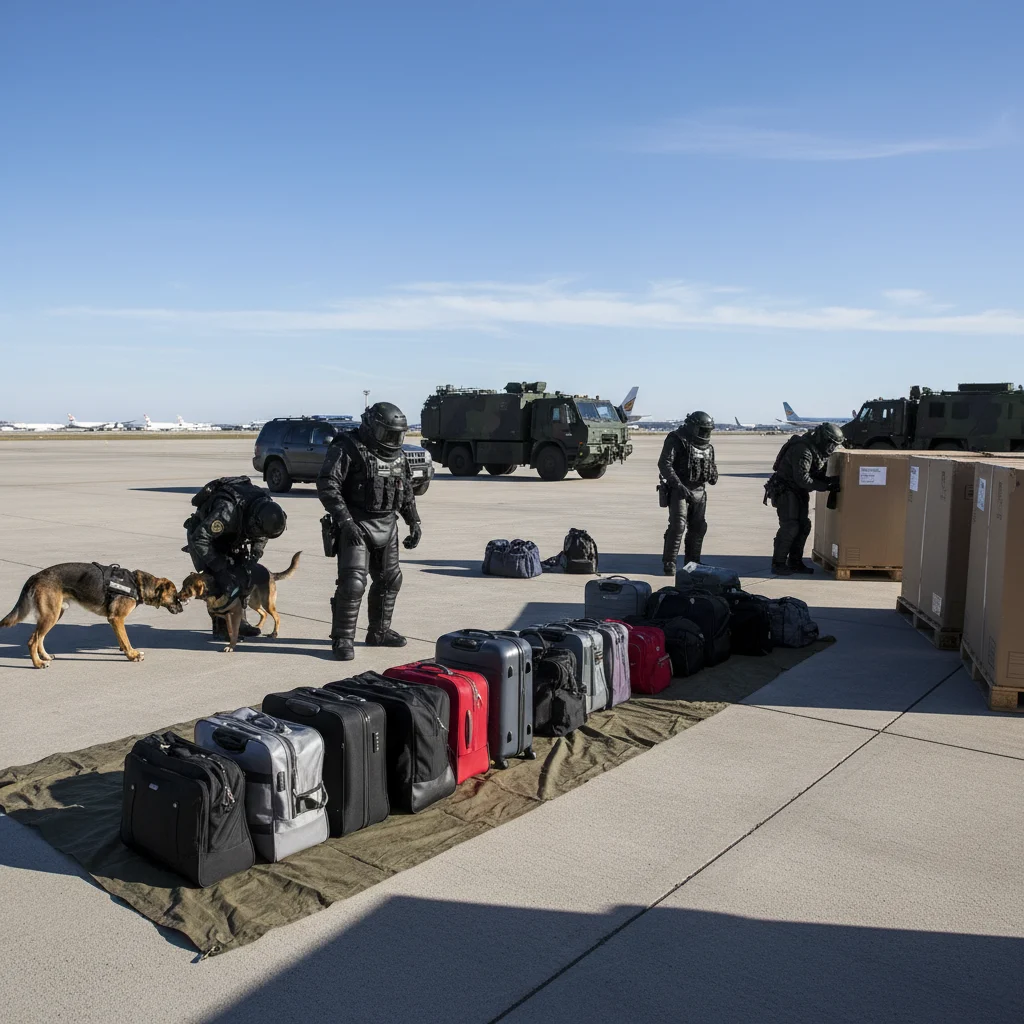
Emergency vehicles, fire engines, and bomb disposal squads met the aircraft as soon as it cleared the runway. Passengers were disembarked via mobile stairs rather than standard aerobridges, and luggage was offloaded piece by piece onto tarmac containment zones. Security personnel used sniffer dogs, X-ray scanners, and trace-detection equipment to examine the cabin, cargo holds, and avionics bays.
After an exhaustive four-hour search, security agencies formally cleared the aircraft. Passengers were accommodated on a replacement flight or given hotel stays, but the incident rippled through the airline’s daily schedule, delaying connecting services and stranding flight crews who exceeded their duty-hour limits.
Revising Threat Assessment Protocols
In response to the surge of unverified threats, the Bureau of Civil Aviation Security and transport ministries have revised the standard operating procedures used by airport Bomb Threat Assessment Committees (BTAC). Historically, even vague online claims were often treated as ‘specific’ threats, mandating immediate diversions, physical evacuations, and grounding the airframe for up to six hours.
The updated rules introduce a multi-tiered verification framework designed to filter out automated bots and repeat hoax accounts before ordering mid-flight diversions.
- Real-time cyber profiling: Threat assessment teams will coordinate directly with cyber intelligence units to evaluate the origin, IP footprint, and credibility of online messages before classifying an alert.
- Dynamic BTAC reviews: Airport security committees will maintain round-the-clock digital monitoring to verify whether an account has posted coordinated spam across multiple carriers.
- Proportional response measures: If a threat is deemed low-credibility or ‘non-specific,’ flights may continue to their destinations under discreet inflight monitoring rather than executing high-risk diversions.
- Accelerated tarmac screening: Airports are receiving upgraded detection hardware to cut turnaround inspection times without weakening safety standards.
The Mounting Cost of False Alarms
Hoax bomb threats impose staggering operational and financial burdens on airlines. Diverting a commercial jetliner costs tens of thousands of dollars in wasted aviation fuel, navigation fees, and ground handling charges. There is also the cost of hotel rooms, passenger rebooking, and crew repositioning.
Beyond the direct financial hit, diversions put intense stress on air traffic controllers and emergency responders. Every unscheduled diversion occupies critical airspace and pulls airport fire services away from routine operations. Aviation experts warn that chronic false alarms risk inducing fatigue among security personnel, potentially dulling vigilance when a genuine crisis arises.
Flight crew scheduling adds another layer of complexity. Aviation safety rules strictly limit how many consecutive hours pilots and cabin crew can work. When a plane is diverted and held for security sweeps, the crew almost always times out. The airline must then fly in fresh crew members before the aircraft can carry passengers again, leading to compounding delays across the network.
Legal Reforms and Stricter Penalties
Governments are taking steps to tighten the legal framework surrounding aviation hoaxes. Lawmakers are drafting amendments to place perpetrators on national no-fly lists immediately upon identification, alongside pursuing criminal charges under anti-terrorism and civil aviation safety statutes.
Investigators face technical hurdles, however. Many recent hoaxes originated from anonymous accounts using virtual private networks (VPNs) and burner email accounts registered in foreign jurisdictions. Aviation security agencies are working with international law enforcement and social media platforms to fast-track data requests, aiming to trace IP addresses before accounts are deleted.
For now, airlines and passengers must navigate the fallout. While the updated protocols give security chiefs more leeway to dismiss obvious hoaxes, pilots and ground controllers maintain that life safety will remain the final deciding factor in any cockpit decision.