The Death of FOMO in the Battle Royale
Fortnite is changing the way it sells digital cosmetics. For years, the battle royale’s business model relied on a simple psychological trick: fear of missing out, commonly known as FOMO. If you did not buy a skin today, it might vanish for months, years, or even forever. This strategy turned digital outfits into status symbols. It created an ecosystem where players valued skins not just for how they looked, but for how rare they were.
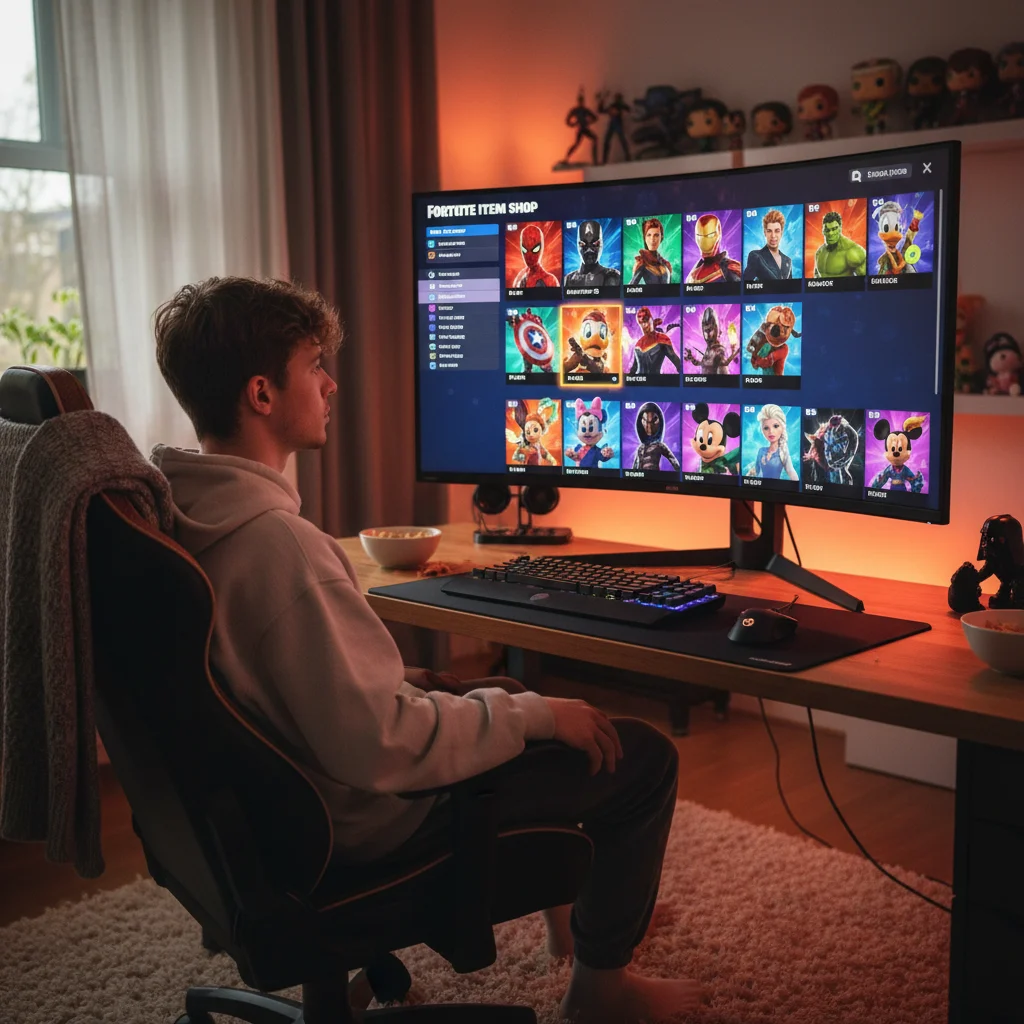
Now, that era is ending. The introduction of a permanent Disney-themed section in the Item Shop—often referred to as the Disney Vault tab—marks a fundamental shift in Epic Games’ strategy. Instead of rotating intellectual properties in and out of the store to trigger impulse buys, Epic is building a reliable, always-open storefront for some of the biggest characters in pop culture.
Why Disney and Epic Are Rewriting the Rules
This transition did not happen in a vacuum. Earlier this year, Disney made a massive $1.5 billion investment in Epic Games. The goal is to build an expansive, persistent digital universe where players can interact with Disney, Pixar, Marvel, and Star Wars properties. To make that vision work, the old shop model had to go. A permanent digital universe requires permanent digital shelves.
Epic Games also recently adjusted its long-standing Battle Pass policy. The developer announced that items from future Battle Passes could appear in the regular Item Shop 18 months after a season ends. Together with the permanent Disney shop, these moves show a company pivoting away from artificial scarcity in favor of a steady, accessible virtual economy.
What This Means for Players and Collectors
For casual players, this is a massive win. Parents no longer have to navigate late-night meltdowns because their child missed a 24-hour window to buy their favorite Marvel hero. Anyone who wants to play as a classic Disney villain or a Star Wars bounty hunter can simply log in, open the shop, and purchase the skin. It makes the game feel more like a digital toy box and less like a high-pressure auction house.
However, the hardcore collector community is feeling left behind. For the “OG” players, half the fun of owning a specific skin was the social capital that came with it. Showing up in a lobby with a rare outfit was a badge of honor. When every cosmetic is readily available, that elite status disappears. The virtual economy is moving from a system of prestige to one of pure self-expression.
The Long-Term Impact on the Gaming Industry
Epic’s shift could force other live-service games to rethink their monetization models. For years, the industry has copied Fortnite’s rotating shop mechanics. But as the market matures, players are growing tired of predatory sales tactics. By proving that a permanent, stable virtual economy can be highly profitable, Epic and Disney are setting a new standard.
- Steady, predictable revenue streams are replacing the unpredictable spikes of flash sales.
- Dismantling artificial scarcity reduces the appeal of illegal third-party account selling.
- Players enjoy a more relaxed, user-friendly purchasing experience without the pressure of expiring timers.
Ultimately, the permanent Disney tab is more than just a place to buy skins. It is a blueprint for the future of digital storefronts. As virtual worlds grow larger and more integrated with real-world brands, the pressure tactics of the past are giving way to a more mature, reliable marketplace.