
India’s aviation watchdog and cyber investigators have launched a comprehensive inquiry following a spate of coordinated hoax bomb threats that disrupted international operations for Air India Express. The Bureau of Civil Aviation Security, commonly known as BCAS, convened emergency briefings with airline executives, airport operators, and central intelligence wings to dissect how false alarms are being weaponized against scheduled commercial carriers.
The disruptions, which unfolded across several consecutive days, forced mid-air diversions, emergency landings, and exhaustive multi-hour ground searches. Most alerts originated from burner accounts on social media platforms, targeting medium-haul international routes connecting tier-two and tier-three Indian cities with hubs in the Gulf and Southeast Asia.
The Anatomy of Coordinated Disruption
The pattern was systematic. Within narrow windows of time, anonymous accounts on platform X posted near-identical messages tagging airline handles, airport authorities, and police agencies. The posts claimed that improvised explosive devices were concealed aboard specific flights.
For Air India Express, a budget carrier running tight turnaround schedules primarily across the Middle East, the timing created maximum operational friction. Flights departing from regional airports such as Kozhikode, Kochi, Tiruchirappalli, and Amritsar were among those singled out. When an alert hits, aviation rules leave little room for hesitation. Crews must follow established emergency checklists, regardless of whether ground staff suspect a prank.
- Flights already airborne were directed to the nearest available diversion airfield equipped with bomb disposal facilities.
- Departing flights were pulled off active taxiways and directed to remote isolation bays.
- Passengers were evacuated via mobile stairs, while baggage, cargo holds, and cabin linings underwent physical screening by sniffer dogs and bomb disposal squads.
None of the searches yielded any hazardous material. Every threat was formally declared a hoax. Yet, the cost in fuel, ground logistics, missed connections, and passenger anxiety proved substantial.
How the Threat Assessment Protocol Operates
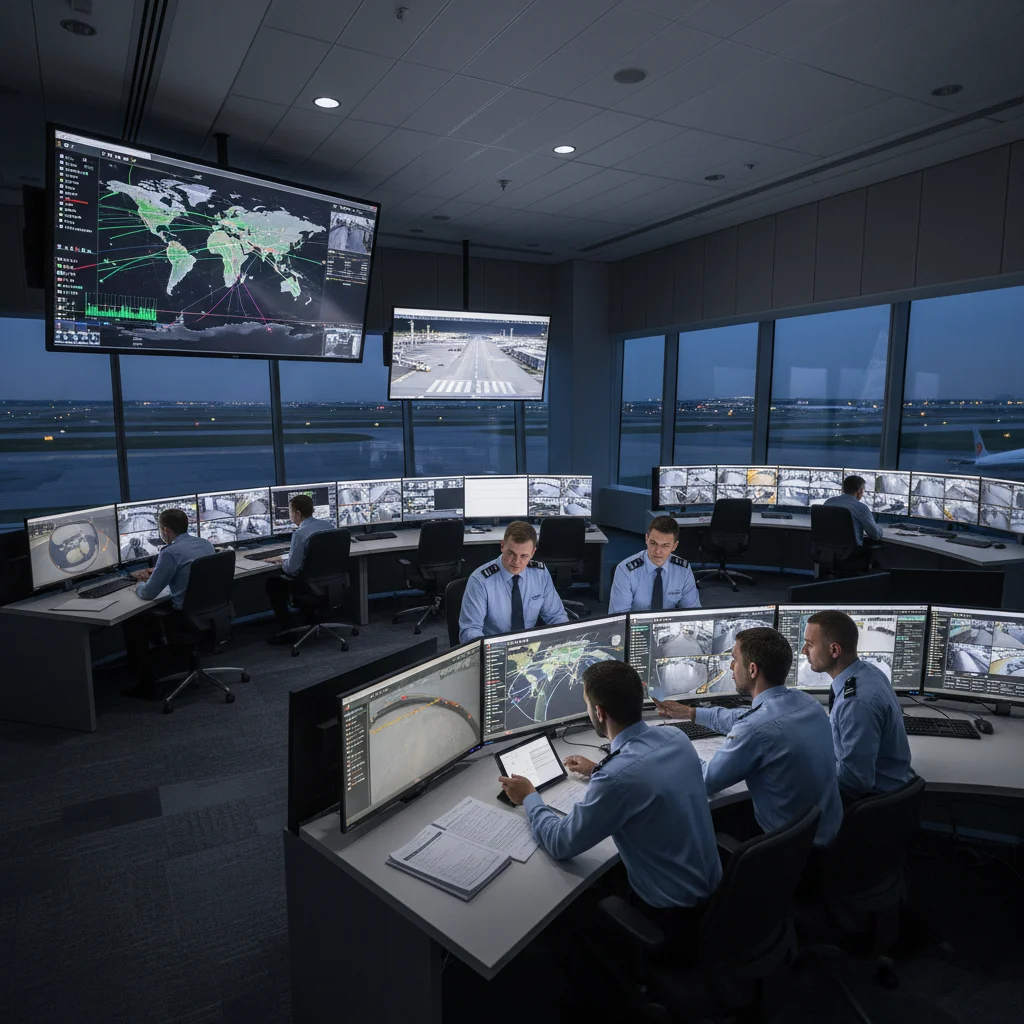
Whenever a security message surfaces, airport operations shift into crisis management mode. Every major airport hosts an on-call Bomb Threat Assessment Committee, known across the industry as the BTAC. The panel includes the airport director, the local station commander of the Central Industrial Security Force, airline security officers, air traffic control supervisors, and local police liaisons.
The committee evaluates the threat against a standardized matrix to determine whether it is specific or non-specific. A specific threat includes actionable details—such as a flight number, a seat location, a timer, or a named individual. A non-specific threat is vague, though in the current climate of heightened alert, even poorly phrased warnings have forced planes into isolation.
Once labeled specific, standard protocol mandates immediate intervention. The plane is parked far from terminal buildings and fuel depots. Every piece of checked baggage is offloaded and spread across open tarmac for manual inspection and X-ray rescreening. Passengers must identify their personal bags on the apron before reloading is permitted. A complete check of an Airbus A320 or Boeing 737 can easily consume five to six hours, causing cascading delays across an airline’s regional network.
Tracking the Digital Footprint
Cybercrime units working alongside BCAS and the Ministry of Home Affairs are attempting to trace the origin of the posts. Early findings indicate that the perpetrators used virtual private networks and proxy servers routing traffic through multiple foreign jurisdictions to conceal their real internet protocol addresses.
Indian authorities have formally requested metadata and subscriber logs from social media companies under mutual legal assistance provisions. Investigators are examining whether the messages are the work of isolated mischief-makers seeking online notoriety or a deliberate campaign designed to stress India’s civil aviation infrastructure.
The central government has taken a sharp stance on the issue. Civil Aviation Ministry officials signaled that existing aviation laws are being reviewed to introduce harsher criminal penalties for hoaxers. Under proposed amendments, individuals found guilty of issuing false threats could face automatic placement on a national no-fly list for life, alongside non-bailable criminal charges under the Suppression of Unlawful Acts Against Safety of Civil Aviation Act.
The Heavy Toll on Airline Operations
For low-cost airlines operating on slender profit margins, the financial hit from rolling hoaxes accumulates rapidly. When an aircraft is diverted mid-route, the airline incurs several major expenses:
- Fuel dumping costs, since aircraft often exceed maximum landing weights shortly after takeoff and must dump or burn fuel before touching down.
- Unscheduled landing and parking fees at diversion airports.
- Hotel accommodations, meal vouchers, and ground transportation for stranded travelers.
- Crew duty time expirations, which occur when pilots and cabin crew hit statutory flight duty limits, requiring relief crews to be flown in before the plane can resume service.
Air India Express operates a dense point-to-point schedule. An aircraft stuck in an isolation bay in Muscat or Jaipur for six hours throws the next three legs of its daily itinerary into disarray. The knock-on delays ripple across the system, frustrating passengers who have no connection to the targeted flight.
Calibrating Safety Without Grounding the Fleet
The wave of hoaxes has reopened an uncomfortable debate within the global aviation community: how can regulators maintain absolute safety without allowing bad-faith actors to paralyze commercial air travel with a single keystroke?
BCAS officials are consulting international bodies, including the International Civil Aviation Organization, to evaluate whether threat assessment guidelines can be refined. Modernizing the BTAC criteria could allow trained evaluators more latitude to dismiss obvious spam without compromising security baselines.
For now, security personnel remain on high alert across Indian air hubs. Enhanced secondary ladder-point checks, where passengers undergo an additional pat-down and hand-luggage scan right before stepping onto the jet bridge, have been stepped up on sensitive routes. Airlines have urged passengers to arrive early and cooperate with ground staff as the industry works through the security backlog.
As the cyber probe moves forward across borders, the aviation sector is balancing vigilance with operational necessity. The priority remains clear: ensure passenger safety remains uncompromised while tracking down those exploiting emergency protocols for disruption.
