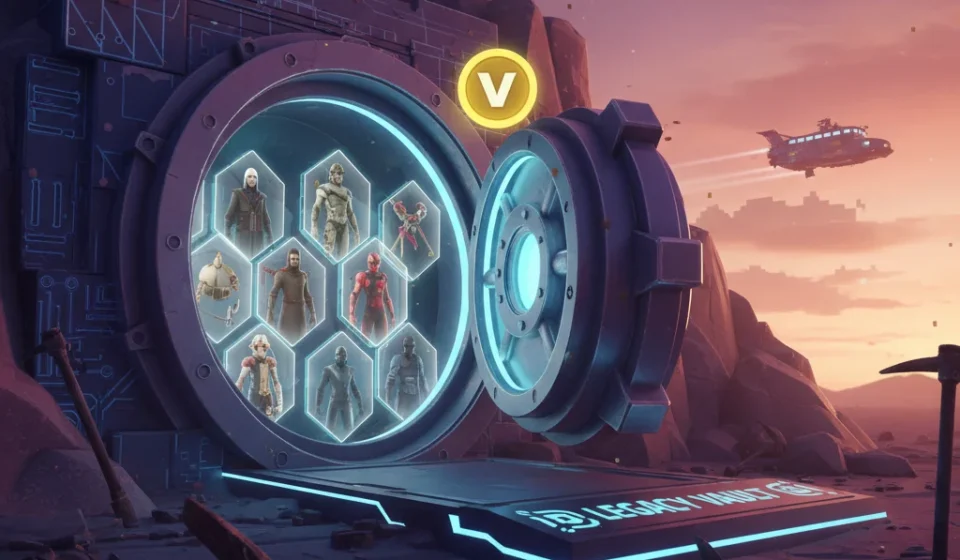

Epic Games is about to shatter Fortnite’s most sacred rule.
Starting October 1, 2026, the developer will officially launch the “Legacy Vault,” a highly controversial new section of the in-game Item Shop. This feature will allow players to purchase cosmetics that were previously locked behind retired Battle Passes. For years, these items were marketed as exclusive, one-time-only rewards. Now, they are going up for sale.
The End of Battle Pass Exclusivity
Since Fortnite Battle Royale exploded in popularity in 2017, its progression system relied on a simple promise: play now, or miss out forever. Players spent countless hours grinding through 100 tiers of challenges to unlock iconic characters like the Black Knight, Omega, or the original Reaper skin. Wearing these skins in-game was a badge of honor. It proved you were there in the early days.
The Legacy Vault changes everything. According to Epic’s official announcement, select outfits, back blings, gliders, and emotes from Chapters 1 through 4 will gradually make their way into the shop. The rollout will begin with a selection of classic Chapter 1 items, which have not been obtainable for nearly a decade.
“We want Fortnite to be a welcoming space for everyone, including those who discovered the game later in its life,” Epic Games said in a brief press release. “The Legacy Vault ensures that newer players can access the rich history of Fortnite cosmetics while we still find ways to honor our most dedicated veterans.”
How the Vault Works
Epic plans to group these releases into themed “Legacy Weeks” to prevent the shop from becoming cluttered. For instance, the opening week of October will focus on “The Pioneers,” highlighting skins from Chapter 1, Seasons 2 through 4. Later in the month, a “Crossover Classics” week is expected to bring back early collaborative outfits that have been locked away for years.
The Legacy Vault won’t be cheap. Epic confirmed that vault items will carry a premium price tag. Individual legendary outfits are expected to cost between 2,000 and 2,500 V-Bucks, a significant markup compared to the cost of a standard 950 V-Buck Battle Pass. The items will rotate weekly in limited quantities, keeping the pressure on players to buy before they disappear back into the vault.
A Split Community Reacts
The announcement immediately set social media ablaze. For some, the news is a dream come true. Millions of players who joined the game during its recent revival—driven by modes like LEGO Fortnite and Zero Build—have long lamented missing out on crossover skins like Darth Vader, Indiana Jones, or early Marvel characters. Under the new system, these highly sought-after skins will finally be within reach.
But veteran players are furious. To many who have played since Chapter 1, the move feels like a betrayal of their loyalty. Some argue that removing the rarity of these skins strips away their identity and worth.
“It completely kills the prestige,” says long-time community member and streamer Tyler “Aero” Higgins. “Part of the thrill of Fortnite was seeing a rare skin in the lobby and knowing that player had been around since the beginning. Now, anyone with twenty bucks can look like an OG. It cheapens the experience.”
To appease these veteran players, Epic Games revealed a compromise. Anyone who originally unlocked these skins during their initial Battle Pass runs will automatically receive a unique “Legacy” style. These exclusive color variants will feature distinct holographic accents and will never be sold in the Item Shop. Whether this gesture will be enough to calm the community’s outrage remains to be seen.The Financial Reality
While the debate rages online, industry analysts point to a very simple motivation for the decision: revenue. While Fortnite remains a massive cash cow, the gaming market has grown increasingly competitive. Re-releasing legendary, highly demanded skins is a guaranteed way to drive V-Buck sales to record heights.
October 1 will mark a turning point for Fortnite. Epic is trading the allure of artificial scarcity for a massive short-term revenue boost and a more accessible game. Whether this decision keeps Fortnite fresh or alienates its core fanbase is a gamble Epic seems more than willing to take.
