
The Ministry of Civil Aviation convened high-level meetings this week to reassess aviation security frameworks and explore stricter legal remedies after a flurry of hoax bomb threats disrupted flight operations across India, notably hitting several Air India Express services. Officials from the Bureau of Civil Aviation Security (BCAS), the Directorate General of Civil Aviation (DGCA), airline representatives, and central security agencies gathered to tighten the response chain against false alarms that have caused widespread logistical chaos.
Over the past few days, social media accounts posted unverified threats targeting domestic and international departures. While every threat was eventually declared a hoax following thorough checks at isolated airport bays, each incident triggered mandatory emergency procedures. Aircraft had to divert, dump fuel, undergo painstaking baggage and cabin scans, and leave passengers stranded for hours.
The Operational and Financial Toll of False Alarms
A single bomb threat sets off a complex, costly emergency chain. Once a message surfaces, whether through an anonymous post on X (formerly Twitter) or an unverified email, the airport’s Bomb Threat Assessment Committee (BTAC) must assemble immediately. If the committee deems the threat ‘specific’, standard operating procedures mandate immediate diversion or grounding.
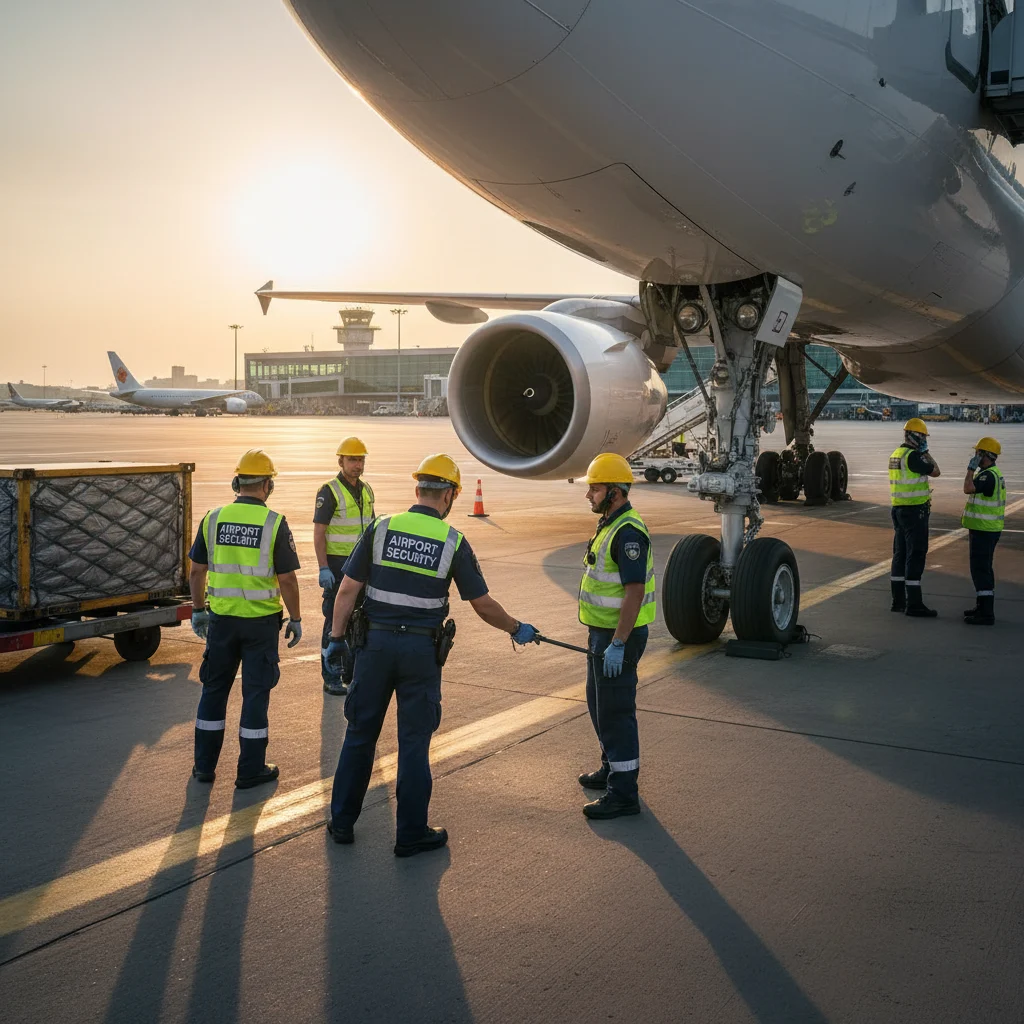
Flight crews must steer aircraft to designated isolation bays away from terminals. Passengers evacuate via stairs, luggage is offloaded piece by piece, and sniffer dogs alongside bomb disposal squads sweep every inch of the cabin and cargo hold. For low-cost carriers like Air India Express, which operate tight turnaround schedules on high-density regional and Gulf routes, a multi-hour delay knocks out an aircraft’s schedule for the rest of the day.
Airlines face massive losses during these incidents. Fuel burn from unexpected diversions, passenger accommodation, crew duty-time limitations, and ground handling fees add up quickly. Aviation analysts estimate that a single wide-body or narrow-body diversion triggered by a hoax can cost carriers anywhere between tens of thousands to hundreds of thousands of dollars, not counting the severe strain placed on airport security personnel.
Tougher Laws and No-Fly List Revisions
To deter pranksters and coordinated cyber actors, the government is considering legislative tweaks. Officials confirmed that discussions are underway to introduce stricter penalties under the Suppression of Unlawful Acts against Safety of Civil Aviation Act, 1982, as well as aviation safety rules.
Under current rules, unruly passenger regulations primarily cover physical or verbal misconduct inside an aircraft cabin or at the airport terminal. The ministry is now evaluating amendments that would automatically place individuals issuing threats online onto the national no-fly list, barring them from commercial flights for extended periods or even life.
- Faster cooperation channels with social media platforms to identify IP addresses and account creators behind fake handles.
- Direct coordination with cyber intelligence units and international law enforcement agencies to trace virtual private network (VPN) routes.
- Expanding the definition of aviation offenses to explicitly criminalize digital and remote hoax communications.
- Making perpetrators legally liable to pay financial restitution for operational costs incurred by airlines and airports.
Inter-Agency Response and Cyber Tracing
Tracing the origin of these threats has proven challenging. Many accounts used to broadcast the threats were set up recently and utilized VPNs or proxy servers to mask the creators’ physical locations. Intelligence wings and state police cyber cells have registered multiple First Information Reports (FIRs) and reached out to foreign tech companies for urgent subscriber details.
At the airports, the Central Industrial Security Force (CISF) and local police forces have stepped up vigil without altering the passenger processing speed at security gates. BCAS has instructed airport operators to remain vigilant while avoiding undue panic that could disrupt standard terminal operations.
Security teams emphasize that while hoaxes are frustrating, protocols cannot simply be bypassed. In civil aviation, treating an unverified threat casually is never an option. The standard protocol must remain rigid until an aircraft is verified clean, which is precisely what makes these hoaxes so disruptive.
Restoring Schedule Stability
Air India Express and other affected carriers have been working to stabilize schedules by deploying standby aircraft and adjusting crew rotations. The airline issued advisories to travelers, reassuring them that safety remains the absolute priority and expressing regret for the unavoidable delays caused by mandatory security checks.
Senior aviation officials noted that while physical safety on board was never compromised, the misuse of digital platforms to disrupt public transport infrastructure requires an uncompromising, cross-border legal response. As investigations progress, authorities aim to send a strong signal that hoaxes targeting civil aviation will be met with severe criminal charges and long-term travel bans.
