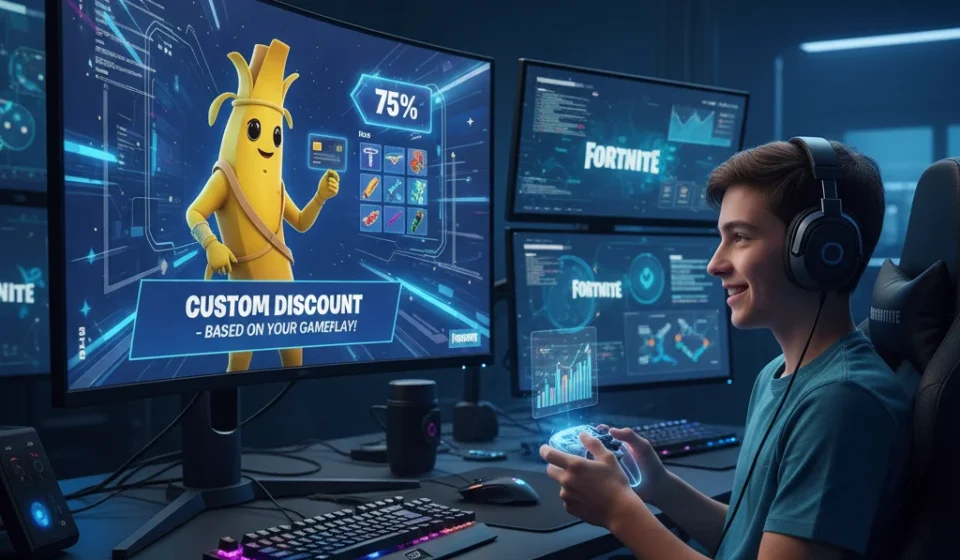

Fortnite’s Item Shop has always been a massive moneymaker. Now, Epic Games is making it a lot smarter. With the quiet rollout of an advanced “Dynamic Bundling” system, the developer is moving away from the static, one-size-fits-all digital storefronts of the past. Instead, Fortnite is leveraging your actual gameplay habits to decide what to sell you—and how cheap to make it.
The Evolution of Dynamic Pricing
For years, Fortnite offered a basic version of dynamic bundles. If you already owned a skin or a harvesting tool in a specific set, the game simply deducted that item’s value from the bundle’s total price. It was a fair, predictable system. But this new iteration goes much deeper into player telemetry.
The updated shop system analyzes player-specific gameplay metrics. It tracks your favorite weapons, the character archetypes you equip most often, your active play hours, and even the crossover franchises you interact with. The backend algorithm then uses this behavior profile to package custom discounts on cosmetics you don’t yet own. It is a highly personalized approach to digital retail that adapts to how you spend your time on the island.
If you spend most of your matches using sniper rifles, you might see a sudden, steep discount on weapon wraps that match your loadout. If you play almost exclusively as Marvel heroes, the shop might bundle a matching glider and emote at a price point tailored just for you. Epic is no longer just selling digital goods; they are selling the specific goods you are most likely to want.
How Players Are Trying to Game the System
As with any automated system, gamers are already trying to find loopholes. On Reddit and Discord, players are trading tips on how to trigger the best discounts. Some suggest playing dozens of matches using default skins to see if the algorithm offers cheap, high-tier skins out of pity. Others recommend repeatedly inspecting specific items without buying them to signal interest to the AI.
However, early community testing suggests Epic’s algorithm is tougher to fool than that. The system seems to look at long-term historical account data rather than just your last few matches. This prevents players from easily manipulating their personalized shop pages with quick tricks.
The Fine Line Between Convenience and Tracking
While cheaper skins are great for the consumer, the backend tracking required to pull this off has raised some eyebrows. Data privacy advocates point out that this system turns every match into an active market research session.
“We are seeing gaming companies adopt the same highly invasive tracking tools used by social media platforms and retail giants,” says Marcus Vance, an independent digital privacy analyst. “Every jump, every weapon swap, and every lobby interaction is being monitored and monetized. It shifts the game from a hobby into an optimized consumer profile generator.”
Epic Games maintains that player data is secure and used primarily to enhance the in-game experience. For the majority of Fortnite’s player base, the privacy trade-off seems to be a minor concern compared to the potential savings. Social media feeds are currently flooded with screenshots of players comparing their bespoke shop pages, treating massive discounts like badges of honor.
Setting a New Industry Standard
This monetization shift addresses a major hurdle for older live-service games: cosmetic fatigue. Veteran players who have been active since 2017 often have lockers overflowing with hundreds of skins. Getting them to spend more V-Bucks requires a highly precise, appealing offer. A generic 20% discount on a random outfit might get ignored, but a 40% discount on an item that perfectly complements their most-played character is hard to resist.
If Epic Games proves that data-driven bundling boosts conversion rates and keeps players spending, rival developers will almost certainly copy the formula. Major live-service titles like Call of Duty, Apex Legends, and Valorant rely heavily on in-game purchases to survive. It won’t be surprising if those games adopt similar behavioral shopping algorithms in the near future.
For now, Fortnite players can expect their Item Shop to look increasingly unique. The era of everyone seeing the exact same storefront is coming to an end, replaced by a retail space that knows what you want before you even open your wallet.