
The Ghost of the Bosnian War Still Divides the Region
The death of Ratko Mladic in a prison hospital in the Netherlands has closed a dark, decades-long chapter of Balkan history. Yet the immediate aftermath of his passing proves that the wounds of the 1990s wars remain wide open. For years, Mladic’s defense attorneys and his family lobbied the international tribunal to allow him to travel to Serbia for medical treatment. Those requests were repeatedly denied by the court in The Hague. Now, his death has set off a chain reaction of political crises, legal battles, and cultural debates stretching from Sarajevo to Podgorica and Belgrade.
Instead of bringing closure, Mladic’s passing has highlighted a stark clash of realities. In Bosnia and Herzegovina, the state is deeply split over how to mark the end of the former general. While some mourn him, others see his death as the final, quiet end of a man who orchestrated some of the worst atrocities on European soil since World War II. The silence from official state channels in Belgrade has been telling, but on the streets, the mood is much louder. In several Serbian cities, loyal supporters gathered on bridges and street corners, lighting flares and hanging banners to honor the man they still view as a hero.
Legal Battles and Political Storms in Bosnia and Montenegro
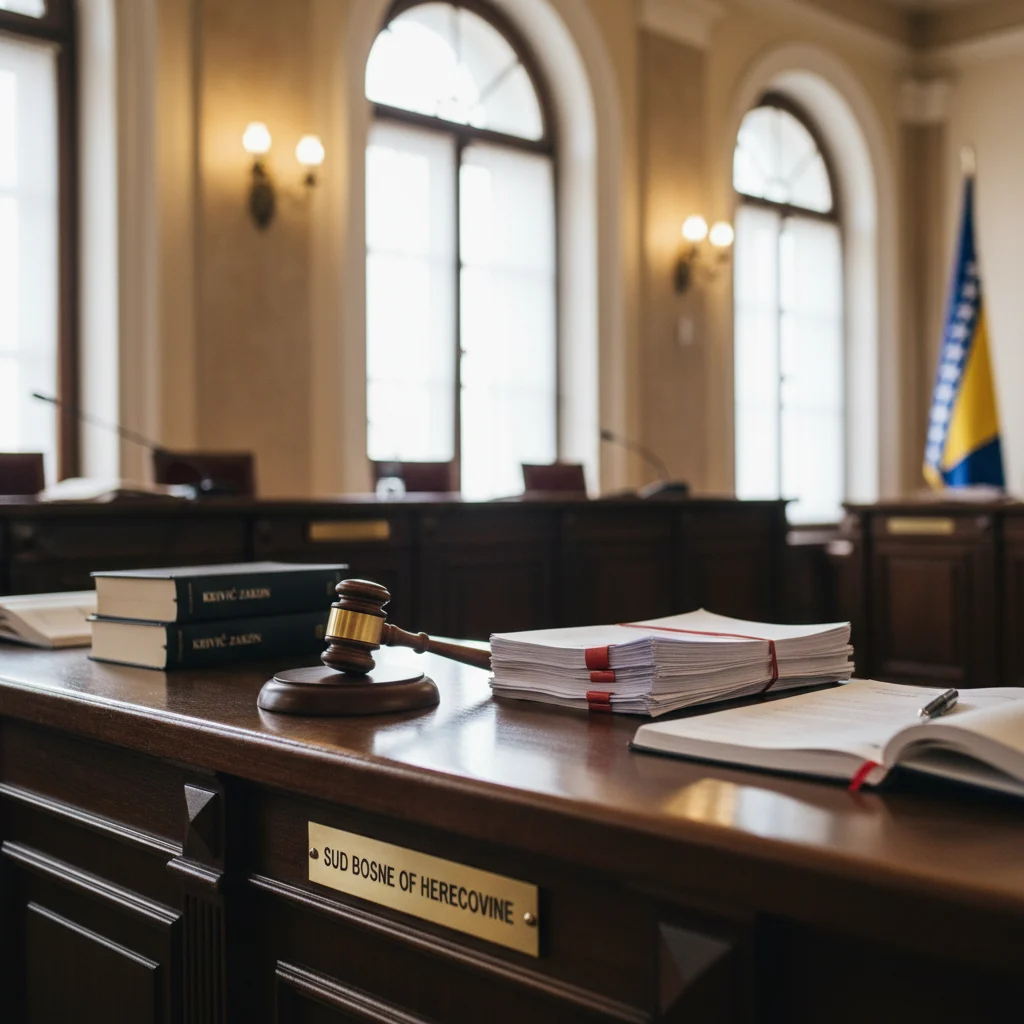
The political fallout from Mladic’s death has already landed on the desks of state prosecutors. In Bosnia, a high-stakes investigation is underway. The state prosecution office is actively looking into statements made by Milorad Dodik, the pro-Russian leader of Republika Srpska, along with several other regional officials. The probe centers on allegations of genocide denial, a criminal offense under Bosnian law. Dodik and his allies have consistently challenged the international court’s rulings regarding the 1995 Srebrenica genocide, and their comments following Mladic’s death have brought these tensions to a boiling point.
Meanwhile, the political shockwaves have crossed the border into neighboring Montenegro. The small Adriatic republic is facing its own government crisis over the issue. Opposition parties are demanding the immediate dismissal of Andrija Mandic, the Speaker of the Montenegrin Parliament. The uproar began after Mandic publicly sent condolences to Mladic’s family. Opponents argue that such a gesture from a high-ranking state official is completely unacceptable for a country aspiring to join the European Union, sparking fierce debates in the parliament in Podgorica.
UEFA Steps In After Football Stadium Incidents
The controversy has also spilled over into the world of sports. On August 31, European football’s governing body, UEFA, officially confirmed to reporters that it has opened a formal disciplinary investigation into the Belgrade football giant, Red Star Belgrade (Crvena zvezda). The inquiry covers multiple potential infractions, including fan behavior linked to the glorification of war criminals.
So far, Red Star Belgrade has remained tight-lipped. The club’s management has not issued any public response or confirmed whether they have received official notification of the UEFA proceedings. It is a familiar headache for Serbian football, where ultras have long used the terraces of Belgrade stadiums to voice radical nationalist slogans and display banners of wartime military figures.
A Look Back at the ‘Bosnian Butcher’
Mladic’s journey from a regular Yugoslav People’s Army (JNA) officer to the commander of the Army of Republika Srpska is well-documented. To his supporters, he was a protector of the Serb people during a chaotic civil war. To the rest of the world, he was the commander who oversaw the siege of Sarajevo and the massacre of more than 8,000 Bosniak men and boys in Srebrenica.
Alan Little, a veteran foreign correspondent who met Mladic during the early years of the Bosnian conflict, recalls him as a highly volatile and dangerous fanatic. In his reports, Little described a man driven by a fierce, uncompromising nationalist ideology. Mladic was eventually convicted of genocide, war crimes, and crimes against humanity, receiving a life sentence. He was not alone in his actions; other key members of his wartime military inner circle, including Radislav Krstic, Zdravko Tolimir, Ljubisa Beara, and Vujadin Popovic, were also convicted by the international tribunal for their direct roles in carrying out the genocide.
Wildfires, School Bills, and Deep Space: The Daily Reality in Serbia
Away from the high-stakes political drama, ordinary citizens in Serbia are dealing with more immediate, everyday anxieties. The end of summer has brought heavy financial burdens for families across the country. Around 700,000 primary and secondary school students are preparing to head back to the classroom. For parents, this means facing the soaring costs of textbooks, notebooks, school bags, and stationery, leaving many struggling to balance their household budgets.
At the same time, environmental concerns are mounting. In the Deliblatska Pesara nature reserve, massive wildfires have been burning for weeks. The situation has left local residents and firefighters in a state of despair. Journalists visiting the area described a landscape of scorched earth and smoke rising directly from the ground. ‘It feels like walking on a volcano,’ one local reporter noted, describing how fires continue to smolder deep within the sandy soil, threatening the unique local ecosystem.
Struggles on the Court and Success in the Stars
Even Serbia’s sports heroes have not been immune to recent struggles. Novak Djokovic shocked fans with an early, highly emotional exit in the very first round of the US Open. The tennis legend did not hide his frustration after the match, admitting to reporters that he struggled to find his rhythm and ‘despised every moment on the court’ during the disappointing defeat.
Yet, there are also stories of pride and scientific achievement. Serbian astrophysicist Darko Donevski, originally from Vrsac, is currently leading a team of researchers involved in NASA’s groundbreaking Nancy Grace Roman Space Telescope project. Speaking about the mission, Donevski explained that this powerful new telescope is designed to survey the cosmos and help scientists solve some of the universe’s greatest mysteries, showing that even in times of regional tension, Serbian minds are making significant contributions on the global stage.