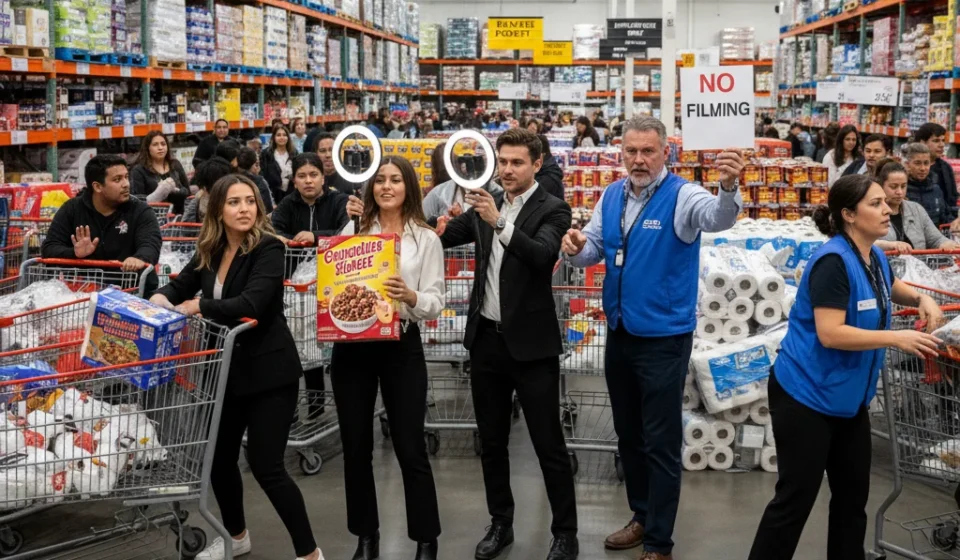

On any given Saturday, a typical Costco warehouse is already a test of patience. Shoppers navigate oversized metal carts through crowded aisles, dodging forklift crossings, free-sample queues, and towering pallets of paper towels. Over the past year, however, a new obstacle has appeared in the middle of the concrete walkways: smartphone tripods, ring lights, and choreographed dance routines.
As social media trends increasingly turn grocery and retail aisles into broadcast studios, Costco is stepping in. Across multiple regions, warehouse managers are stepping up enforcement of the company’s longstanding, though previously loosely monitored, commercial photography and filming bans. For repeat offenders who obstruct aisles or record customers without permission, managers are making one thing clear: their membership card can and will be revoked on the spot.
The Rise of Warehouse Content Creation
Costco has always enjoyed a dedicated fan base, but social media platforms like TikTok, YouTube Shorts, and Instagram Reels have amplified that devotion into a distinct subculture. Creators build entire channels around Costco hauls, weekly clearance finds, food court taste tests, and bulk-item lifestyle hacks.
While quick product photos rarely trigger corporate pushback, the format of content creation has shifted toward elaborate, disruptive productions. Trend-chasers now perform synchronized group dances in front of walk-in dairy coolers, stage theatrical prank videos, and set up stationary cameras that capture dozens of unsuspecting shoppers trying to reach a box of cereal.
For warehouse staff and everyday members, the novelty wore off fast.
“You have people literally blocking the bakery corridor for twenty minutes trying to get the right lighting for a ten-second clip,” said Marcus Vance, an assistant general manager at a warehouse in the Pacific Northwest who requested anonymity to speak on internal operations. “Our members pay an annual fee to shop efficiently, not to be background extras in someone’s monetization scheme. Safety and foot traffic flow always come first.”
Private Property and the Membership Agreement
Unlike public sidewalks or municipal parks, retail stores are private property. Warehouse clubs like Costco operate under an even stricter legal framework because access is governed by a private membership agreement.
When customers pay their annual dues—ranging from $65 for a standard Gold Star tier to $130 for an Executive membership—they sign terms that explicitly require adherence to club rules. Key policies include:
- Prohibitions against unauthorized filming, recording, or commercial photography inside warehouse grounds.
- Mandatory compliance with safety instructions from staff, particularly around heavy machinery and high-traffic loading zones.
- The retailer’s unilateral right to terminate a membership and refund remaining dues at management discretion.
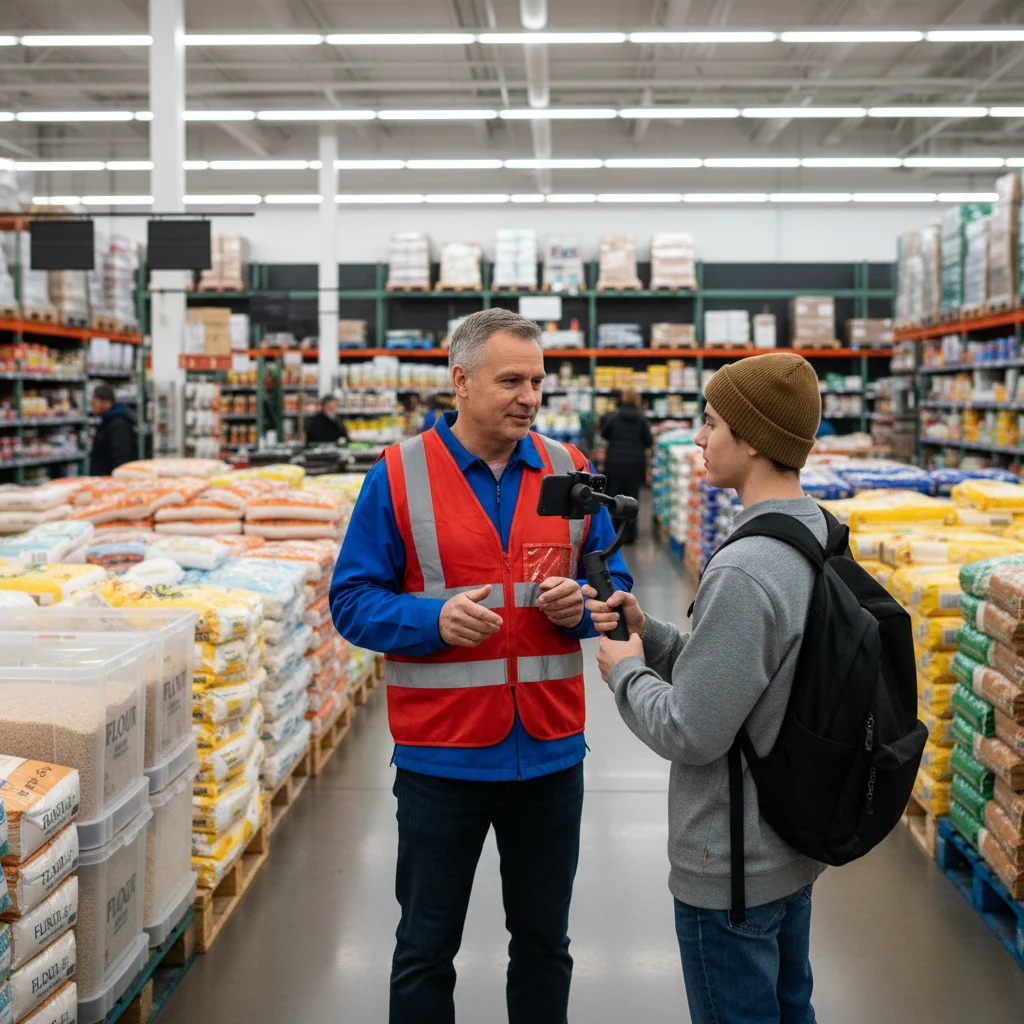
While taking a quick snapshot of a product price tag to text a spouse remains perfectly acceptable, creating multi-take video projects crosses the line into policy violation. In recent months, staff members have been instructed to intervene earlier when they see tripods or gimbals deployed on the sales floor.
Shopper Backlash and Privacy Concerns
The pushback is not coming solely from management. Regular shoppers have become increasingly vocal about their frustration. Many customers resent having their children or themselves recorded while running everyday errands, especially when those videos end up on public feeds viewed millions of times.
“I walked around a corner with my two young kids and nearly tripped over a mini tripod balanced on a flatbed cart,” said Elena Rostova, a regular shopper at a suburban Chicago Costco. “The person filming glared at me because I ruined their shot. It is absurd. We are here to buy groceries, not dodge aspiring internet celebrities.”
Legal experts point out that while customers have limited legal expectations of complete privacy in semi-public commercial spaces, retail owners have total authority to regulate conduct. If a shopper refuses to put away a recording device after a polite request, warehouse managers can escort them to the exit, cancel their account, and refund their prorated fee on the spot.
The Creator Perspective: Free Publicity or Disruption?
Creators who focus on wholesale retail argue that their videos provide enormous promotional value. A single viral clip highlighting a new bakery item, a discounted designer jacket, or a seasonal patio set can drive thousands of sales within forty-eight hours.
Some influencers contend that strict enforcement hurts small businesses and independent reviewers who highlight niche products stocked by the chain. They argue that a distinction should be made between harmless, quick reviews and obstructive dance routines or hidden-camera pranks.
“Most creators are respectful and try to stay out of everyone’s way,” said Jordan Miller, who runs a popular lifestyle account dedicated to grocery savings. “We highlight items that would otherwise sit unnoticed on high shelves. But when a few people start setting up full production gear and blocking main traffic lanes, it ruins the relationship for everyone.”
Retail analysts note, however, that Costco does not depend heavily on organic influencer hype to drive its bottom line. With an industry-leading membership renewal rate hovering around 90 percent in North America, the wholesale giant prioritizes operational efficiency and member satisfaction over viral social impressions.
A Broader Trend Across Big-Box Retail
Costco is far from the only company rethinking its stance on public filming. Gym chains like Equinox, Life Time, and Planet Fitness have instituted strict zero-tolerance policies regarding tripod use and recording in workout areas to protect member privacy.
Major grocery chains and department stores, including Trader Joe’s and Target, have also tightened restrictions, instructing floor teams to stop unauthorized video shoots that could disrupt shoppers or create liability risks.
As recording technology shrinks and social platforms continue to incentivize attention-grabbing public stunts, retailers face an ongoing challenge. For Costco, the stance is hardening: the warehouse is a distribution center designed for bulk shopping, and anyone treating the snack aisle like a production studio might find their card punched at the door.