A New Era for the Metaverse
The Walt Disney Company and Epic Games are ready to take their $1.5 billion partnership to the next level. During a recent presentation, the two companies laid out the first concrete plans for their massive, persistent Disney universe living inside Fortnite. This isn’t just a collection of character skins or a temporary event. Instead, it is a permanent digital playground built entirely in Unreal Engine, designed to let users play, watch, shop, and even construct their own virtual Disney theme parks.
The project aims to merge Disney’s beloved storytelling with Fortnite’s chaotic, highly social ecosystem. At the heart of this initiative is Unreal Editor for Fortnite (UEFN). Epic Games confirmed that creators will have access to official Disney assets. This will allow them to build custom environments, interactive games, and digital attractions using intellectual properties from Marvel, Star Wars, Pixar, and Avatar.
“This represents a completely new way for fans to engage with our stories,” Disney CEO Bob Iger said during the announcement, highlighting the project as Disney’s biggest entry ever into the gaming space.
A Sandbox for Virtual Imagineers
For years, Disney fans have dreamed of designing their own theme parks. Soon, they will get to do exactly that digitally. Through UEFN, players will be able to piece together rides, construct elaborate castles, and set up interactive exhibits. These player-built spaces can then be shared with the broader Fortnite community. It is a massive bet on user-generated content. But it might just work.
Epic Games CEO Tim Sweeney has long championed the concept of an open metaverse. He views this partnership as a crucial stepping stone. “We are building something entirely new,” Sweeney explained. “A persistent ecosystem that brings together the communities of Disney and Fortnite in a way that’s never been done before.”
The environment will operate adjacent to Fortnite’s existing modes like Battle Royale, LEGO Fortnite, and Rocket Racing. However, it will feature its own distinct identity. Players can seamlessly jump between fighting in the loop and exploring a highly detailed recreation of a Disney park or a custom-made Star Wars outpost. This seamless transition is key to keeping players inside the ecosystem.
Custom Tools for Creators
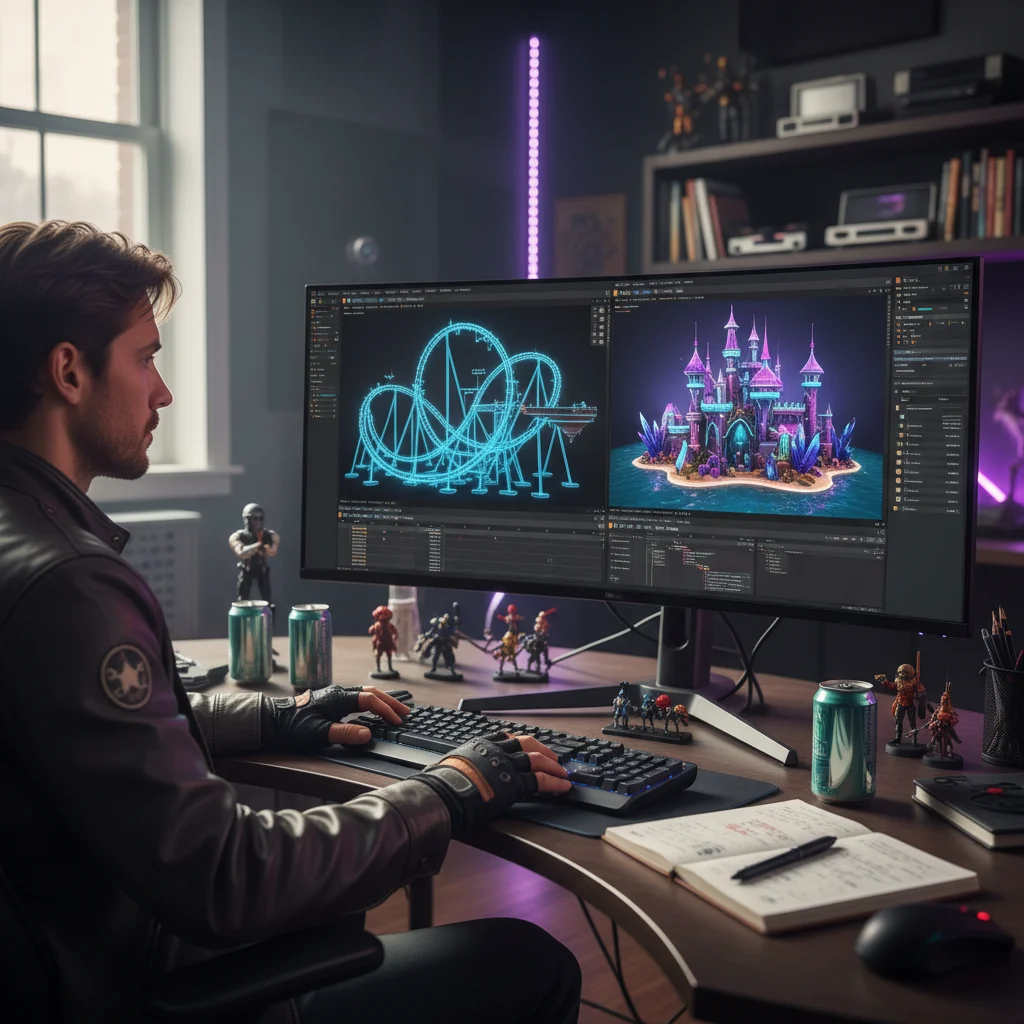
To make this happen, Epic is developing specialized asset packs within UEFN. Creators won’t just be placing static models. They will have access to advanced scripting tools to design custom AI behaviors, ride physics, and cinematic triggers. Imagine building a roller coaster where players dodge TIE fighters or fight alongside the Avengers. That is the level of depth Epic and Disney are aiming for.
This initiative also opens up massive opportunities for independent developers. By providing high-fidelity Disney assets, Epic is lowering the barrier to entry for high-quality game design. Anyone with a good idea and some technical know-how can theoretically build a world-class Disney attraction inside Fortnite.
Monetization and the Creator Economy
One of the biggest questions surrounding the project is how creators will benefit financially. Epic Games clarified that player-designed Disney experiences will fall under Fortnite’s existing creator economy. This means eligible builders who design popular Disney-themed maps or games will be able to earn payouts based on player engagement. It could turn virtual park building into a highly lucrative career path.
To keep the platform safe and family-friendly, Epic is implementing strict moderation guidelines. Disney’s intellectual property is highly guarded, so creators will have to work within specific templates and rules to ensure all content matches Disney’s brand standards. Still, the creative freedom promised is unprecedented for a brand of this scale.
What to Expect at Launch
While an exact release date remains under wraps, Epic Games hinted that the first phases of the Disney universe will begin rolling out in late 2025, with continuous updates planned over several years.
At launch, players can expect a central hub that connects various “hubs” or worlds dedicated to specific franchises. From there, portals will lead to user-generated spaces, official Disney experiences, and virtual storefronts where players can purchase physical and digital merchandise.
The scale of this collaboration underscores a shift in how major entertainment companies view gaming. Rather than just licensing their characters for one-off titles, brands like Disney are looking to establish permanent digital outposts where younger audiences already spend their time. With Fortnite boasting over 230 million monthly active users, it is the perfect venue for Disney to build its virtual future.