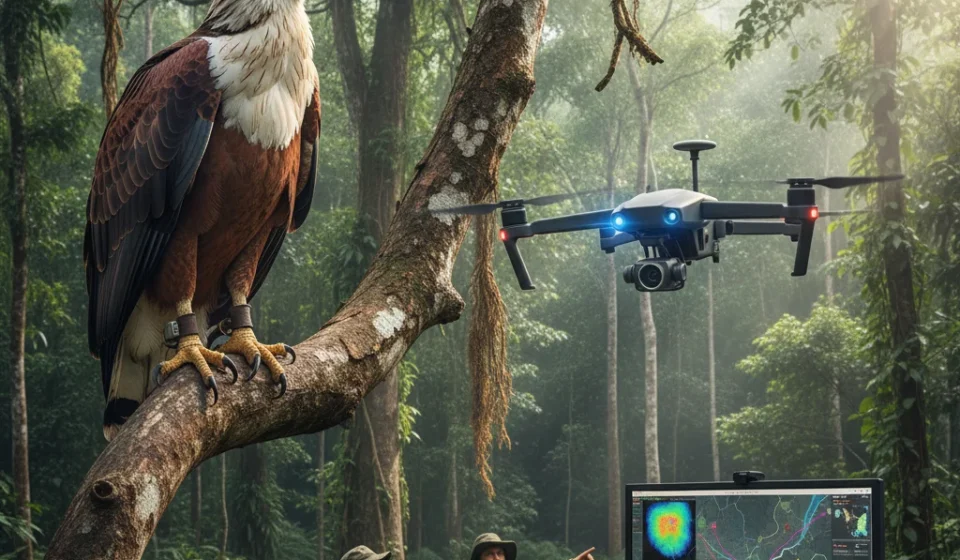

Deep in the Amazon rainforest, a silent hunter is getting a high-tech guardian angel. The harpy eagle, one of the world’s largest and most powerful birds of prey, is facing a quiet crisis. As logging trucks chip away at its habitat, finding and protecting these birds has become an urgent race against time.
Now, conservationists are turning to the skies. They are deploying drones equipped with artificial intelligence to spot the elusive raptors and their massive canopy nests.
The Needle in the Green Haystack
For decades, finding a harpy eagle nest was nearly impossible. These birds build their homes in the crowns of the tallest trees, often more than 150 feet above the forest floor. Biologists used to spend weeks hiking through dense, humid undergrowth. They stared upward until their necks ached. Most of the time, they found absolutely nothing.
“It was exhausting and incredibly slow,” says Dr. Lucas Silva, a conservation biologist working in the Brazilian state of Mato Grosso. “We could walk for miles and miss a nest just because of a few thick leaves.”
The jungle is thick. The heat is oppressive. Under the canopy, visibility is often limited to just a few yards. That is where the drones come in.
How the AI Spotter Works
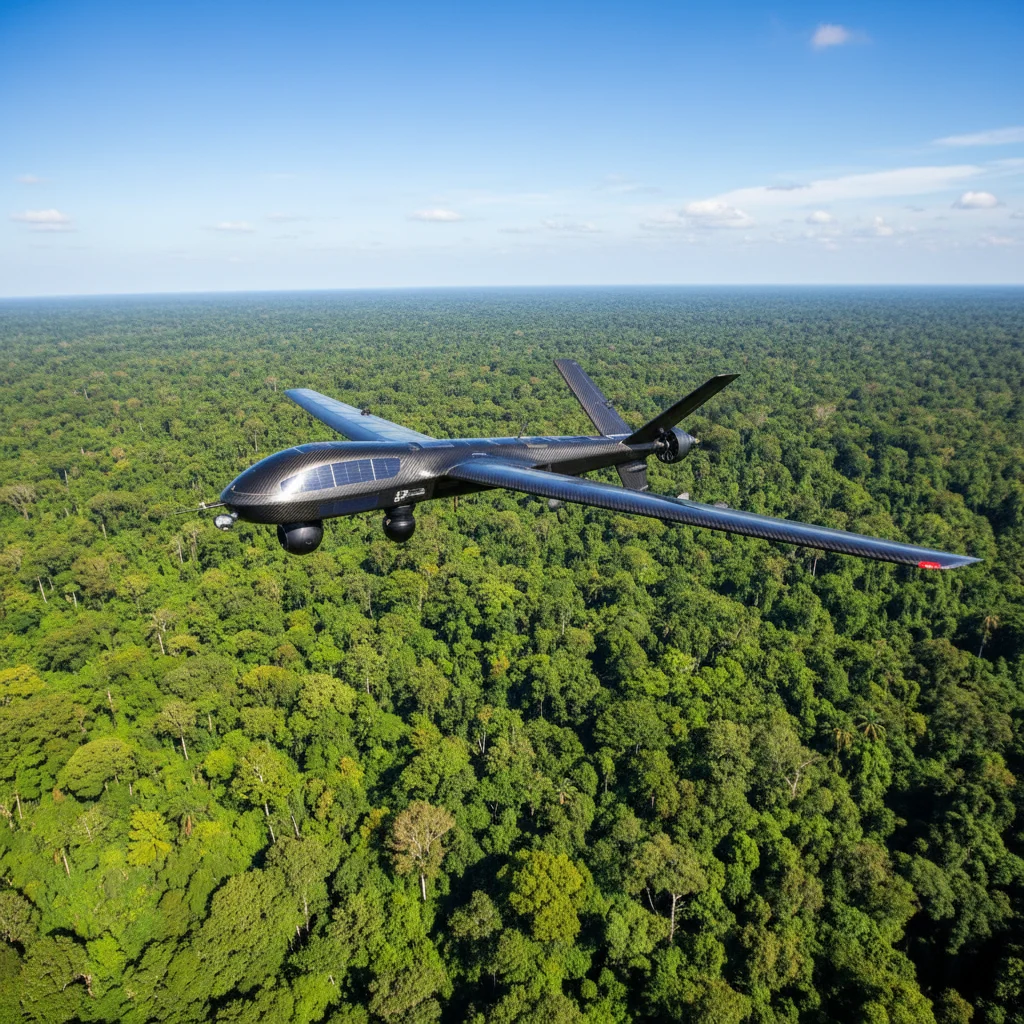
Equipped with high-definition cameras, the small aircraft sweep over the forest canopy. They cover more ground in an hour than a ground team could in a month. But looking through hundreds of hours of video footage manually would take forever. The real breakthrough is the onboard artificial intelligence.
Engineers trained the AI algorithm using thousands of aerial images of the Amazon canopy. The software learned to recognize the specific, messy pile of thick branches that makes up a harpy eagle nest. It also looks for the distinct white plumage of eagle chicks, which stands out against the dark green foliage.
Overcoming Rainforest Obstacles
Flying drones in the Amazon is not easy. High humidity, sudden downpours, and thick foliage can easily knock a standard drone out of the sky. Battery life is another major hurdle. To beat these challenges, the research team uses custom-built, lightweight fixed-wing drones. These gliders can stay airborne for over two hours, riding thermal wind currents just like the eagles themselves.
When the drone’s camera spots a potential nest, the AI flags the exact GPS coordinates. Back at camp, researchers review the flagged footage to confirm the sighting.
Real Results in the Field
During a recent pilot program, the technology proved its worth. Over a three-week trial, the drones scanned roughly 5,000 hectares of fragmented forest. The AI successfully identified seven previously unknown nesting sites.
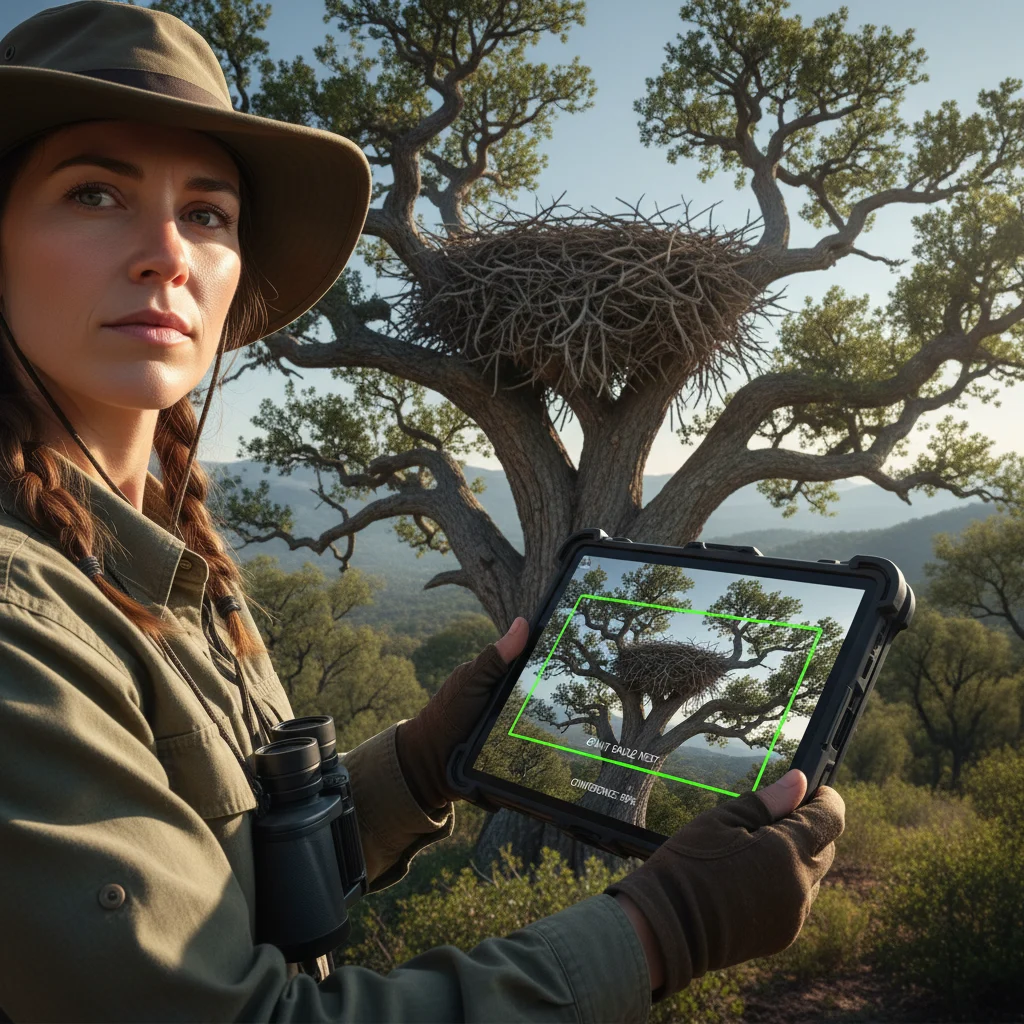
- Scanned 5,000 hectares of dense canopy
- Discovered 7 new nesting sites
- Reduced search times by over 80 percent
“We were stunned by the accuracy,” Silva says. “The system found nests we had walked right past on the ground.”
Working with Local Landowners
Finding the nests is only half the battle. Protecting them is the next step. Harpy eagles have a very slow reproductive cycle, raising just one chick every two to three years. They rely on giant, emergent trees like the Brazil nut tree, which are often targeted by illegal loggers.
In Mato Grosso, much of the remaining forest exists on private ranch land. Once a nest is located, conservationists share the data with the landowners. By showing farmers exactly where the eagles are nesting, researchers can convince them to preserve those specific stands of forest.
Many landowners are proud to host the rare birds. Others are motivated by the threat of heavy fines for destroying endangered species habitat. The drones provide the hard evidence needed to make these protection zones official.
The team now plans to expand the drone program to parts of Peru and Colombia. They hope to update the AI to detect other threatened canopy species, such as spider monkeys and sloths. For the harpy eagle, this eye in the sky is a vital lifeline in a shrinking forest.