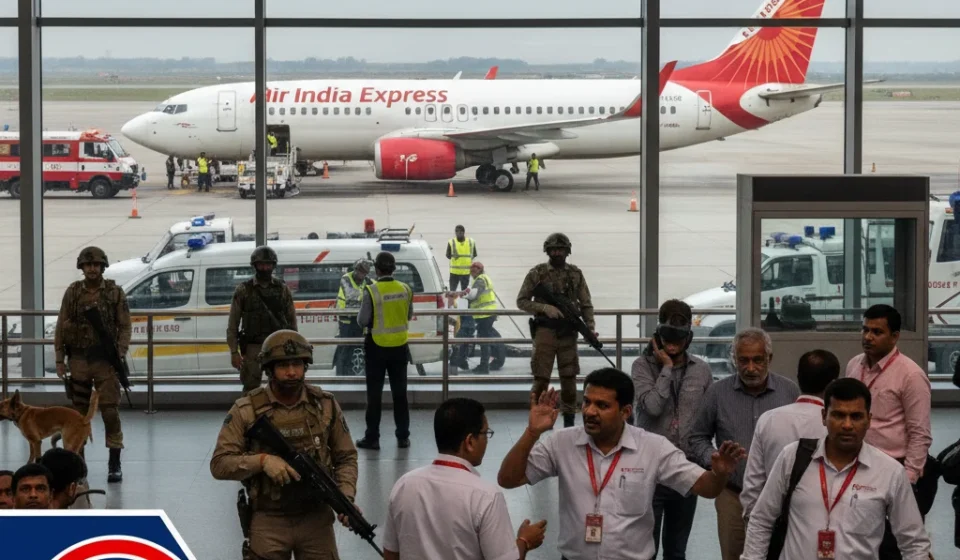

An Air India Express flight en route to its destination was forced into an unscheduled emergency landing this week after receiving a mid-air bomb threat that later turned out to be a hoax. The incident triggered high-level emergency protocols, diverted the aircraft to a designated isolation bay, and initiated a sweeping security review by civil aviation authorities and cyber intelligence units.
Mid-Air Scare and Emergency Response
The scare began when an anonymous message claiming explosives had been planted on board surfaced online, tagging flight tracking handles and airline support channels. Pilots were notified immediately while cruising at altitude. In line with standard operating procedures, the flight crew declared a priority landing status with air traffic control.
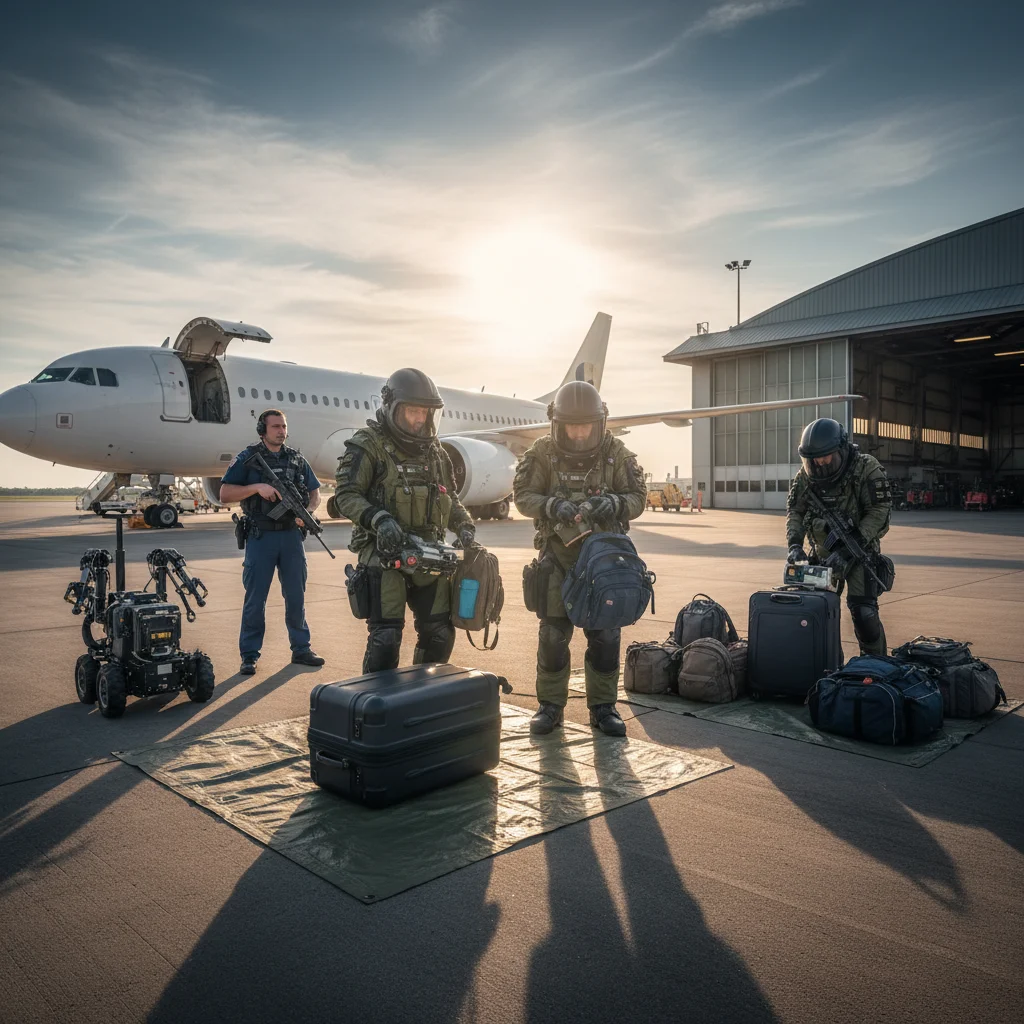
The aircraft touched down safely at the nearest international airport equipped with specialized isolation and explosive disposal facilities. Ground personnel moved fast. Emergency fire tenders, specialized bomb disposal squads, sniffer dog teams, and airport security commandos surrounded the jet the moment it rolled to a stop at the remote bay.
All passengers and crew members were evacuated via mobile airstairs into transit buses, leaving their hand luggage and personal belongings behind for safety reasons. Technicians and security officers spent over five hours conducting a physical and electronic sweep of the cabin, galley areas, cargo hold, and landing gear bays. Authorities declared the aircraft clean after confirming that no suspicious items or explosive residues were detected.
The Anatomy of a Hoax: Tracing Digital Footprints
While the aircraft was cleared for service, the investigative apparatus shifted into high gear. Central intelligence agencies, cyber crime police, and the Bureau of Civil Aviation Security launched a joint inquiry to locate the origin of the threatening dispatch.
Initial forensic analysis indicated that the perpetrators used disposable virtual private network connections, proxy servers, and newly created social media accounts to disguise their true digital locations. Investigators have reached out to social media platforms to obtain IP logs, device metadata, and associated registration details.
“These threats are designed to exploit operational safety rules,” a senior security official involved in the probe said on background. “Even when our intelligence suggests a high probability of a hoax, standard operating procedures dictate that every threat must be treated as genuine until verified otherwise. Aviation safety permits zero margin for error.”
The threat follows a broader pattern of coordinated hoax messages that have disrupted domestic and international carriers over recent weeks, creating severe operational friction across the civil aviation grid.
The Financial and Operational Fallout
A mid-air diversion is far more than a minor schedule slip. It sets off a costly, chaotic chain reaction across an entire airline network. When a plane makes an unscheduled landing, it burns through expensive jet fuel, often dumping tonnes of fuel beforehand to meet safe landing weight limits.
- Airport and Ground Handling Charges: Unscheduled landings incur emergency handling fees, isolation parking costs, and unexpected navigation duties.
- Crew Flight Duty Time Limitations: Once an aircraft is diverted and delayed for hours, crew members frequently exceed their statutory duty time limits. Airlines must scramble replacement pilots and cabin crew, often flying them in from other bases.
- Passenger Accommodation: Airlines must provide hotel rooms, food vouchers, and rebooking options for hundreds of stranded travelers.
- Network Knock-on Delays: A single delayed aircraft disrupts subsequent rotations scheduled throughout the day, delaying thousands of downstream passengers.
Aviation analysts estimate that a single widebody or narrowbody diversion triggered by a security threat costs an airline tens of thousands of dollars in direct expenses, not counting brand reputation damage and lost productivity.
Regulatory Push for Harsher Penalties
In response to the recurring wave of false alarms, the Ministry of Civil Aviation and law enforcement bodies are pushing for aggressive legislative amendments to deter future offenders.
Current discussions center on modifying the Suppression of Unlawful Acts against Safety of Civil Aviation Act to specifically address digital threats originating from the ground or abroad. Under the proposed framework, individuals caught issuing fake bomb threats would face severe, non-bailable criminal charges, substantial financial restitution penalties to cover airline losses, and mandatory placement on the national no-fly list for a minimum of five years.
Refining the Threat Assessment Matrix
At the same time, the Bureau of Civil Aviation Security is actively reassessing how the Bomb Threat Assessment Committee evaluates incoming threats. At present, committees stationed at individual airports review the specificity, tone, and delivery channel of each warning before deciding whether to classify it as specific (actionable) or non-specific.
Aviation experts are exploring machine-learning tools and centralized real-time databases to help analysts cross-reference incoming threats against known hoax networks within seconds. The goal is simple: weed out automated spam without lowering safety bars for genuine emergencies.
Balancing Safety Against Deliberate Disruption
Airline operators and industry trade bodies have expressed strong support for tighter investigative coordination. However, they acknowledge the tactical dilemma posed by modern cyber harassment. If an airline ignores a threat, it risks catastrophic disaster. If it diverts every time a fake account posts a message, malicious actors achieve their goal of grounding fleets at virtually zero personal cost.
“The aviation industry relies completely on public trust,” noted an airline operations director. “Our pilots followed every protocol precisely as trained, and our passengers cooperated fully despite the frustration. The only permanent fix is tracking down the culprits, prosecuting them publicly, and making the cost of issuing these hoaxes unbearable.”
Security checks at major airports remain on elevated alert. Passengers are advised to allow extra time for baggage screening and document verification as ground teams maintain strict vigilance during the ongoing investigation.
