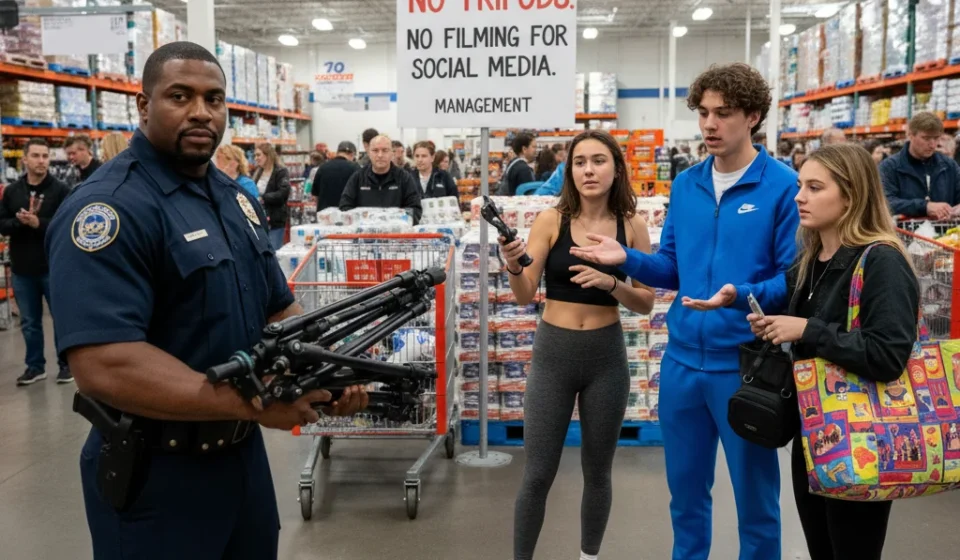

Shopping for a 36-pack of paper towels and a rotisserie chicken used to be a simple, predictable errand. Lately, however, navigating a Costco warehouse on a Saturday afternoon has felt more like wandering through an active video production set. Ring lights, extendable smartphone stands, and synchronized dance routines have increasingly clogged the high-traffic bulk aisles. Now, Costco management is putting its foot down.
Over the past month, warehouse managers across North America received updated reminders regarding store filming policies. The directive is straightforward: tripods, external lighting setups, and disruptive commercial filming are strictly prohibited inside all Costco locations. While casual smartphone snapshots remain largely untouched, anyone erecting stands or staging multi-take performances in the aisles is being promptly asked to pack up and leave.
The Trend That Broke the Bulk Aisle
The sudden enforcement push follows a wave of viral social media clips that took over feeds this spring. Under trending audio clips, creators set up heavy tripods in the wide central runways of the store, often right in front of towering displays of paper goods or snack foods. Performers would dance, lip-sync, or execute elaborate pranks while everyday shoppers tried to steer heavy orange flatbed carts around them.
In several widely shared videos, frustrated members could be seen waiting patiently in background frames or visibly turning their carts around to avoid walking into camera view. In one incident in Southern California, a creator’s tripod was knocked over by a member turning a corner with a pallet cart, sparking a heated argument that required warehouse security to intervene.
For Costco, the issue is not just about manners. It is about physical safety and liability.
- Heavy equipment like forklifts frequently operate in designated zones or near stock areas.
- Narrowing aisles with stationary tripods creates immediate bottlenecks during peak hours.
- Shoppers focused on dodging creators risk tripping or bumping into heavy merchandise displays.
- Privacy concerns from members who do not wish to appear in monetized social content without consent.
Creators Cry Foul Over Lost Promotion
The aggressive clampdown has sparked immediate pushback from lifestyle vloggers, fitness influencers, and budget-shopping creators who rely on in-store footage for their livelihood. Many argue that their videos provide retailers with valuable, organic marketing that reaches millions of younger consumers.
“We are out here showing people how to save money on bulk groceries and highlighting great products Costco sells,” said Maya Lin, a lifestyle creator with over 400,000 followers on TikTok. “To be treated like a nuisance when we are basically giving the company free advertising feels really shortsighted. Handheld filming doesn’t always cut it when you need to show nutrition labels or hold two items up for comparison.”
Other creators point out that “Costco Haul” videos are an entire genre online, generating hundreds of millions of views across platforms. Some influencers claim warehouse staff have applied the policy unevenly, confiscating membership cards or threatening bans over small desktop mounts attached to shopping carts.
Private Property and Membership Terms
Despite the online outrage, retail analysts and legal experts note that Costco holds every legal right to govern what happens inside its walls. Unlike public sidewalks or municipal parks, Costco operates on private property under a paid membership contract.
The company’s standard membership agreement explicitly states that management reserves the right to refuse service or revoke memberships for disruptive behavior. Filming commercial content without corporate media clearance has long been against official company policy; staff simply let it slide when it was limited to quick, discrete phone videos.
“Retailers are in a tough spot,” explains retail strategist Marcus Vance. “On one hand, user-generated content drives real sales trends. When a snack item goes viral on social media, it flies off the shelf the next morning. But when content creation disrupts the shopping experience for the 99% of members who just want to buy their groceries and leave, the retailer has to protect the core customer base. Costco’s brand relies on efficiency and member satisfaction, not on being a studio backdrop.”
Shoppers and Workers Welcome the Move
Inside the warehouses, regular members and floor staff appear broadly supportive of the stricter stance. For retail workers already managing massive inventory loads, policing influencer behavior added an unnecessary layer of stress to their shifts.
“People forget these warehouses are working industrial spaces,” said an assistant floor manager at a Midwest Costco location who spoke on the condition of anonymity. “We have heavy merchandise stacked twenty feet high. When someone drops a tripod in the middle of a main thoroughfare to do a 15-minute dance routine during our peak rush, it creates a genuine hazard. Our priority is getting pallets out safely, not coordinating around someone’s production schedule.”
Shoppers have also voiced relief on community forums and social platforms, sharing stories of being cornered in dairy walk-in coolers or having their children inadvertently filmed by wandering vloggers.
What Filming Is Still Allowed?
Costco has not issued a total ban on cell phones. Members can still take quick photos of prices, text pictures to family members to confirm brand preferences, or record short handheld clips of new seasonal items. The restriction targets dedicated production equipment:
- No standing tripods or monopod poles placed on warehouse floors.
- No external ring lights, reflectors, or mounted microphones.
- No staged performances, dancing, or loud music broadcasts that block foot traffic.
- No harassment or unauthorized filming of employees and other shoppers.
The Broader Battle for Retail Floors
Costco is far from the only big-box retailer grappling with the boundaries of public content creation. Stores like Target, Trader Joe’s, and major gym chains have increasingly rolled out specific anti-tripod policies over the past two years to protect customer privacy and maintain orderly spaces.
As cameras get smaller and creator culture continues to intersect with mundane daily routines, the friction between casual shoppers and online producers is unlikely to disappear. For now, however, Costco members looking to pick up their bulk goods can expect clearer paths through the paper towel aisle—without having to dodge a choreography rehearsal in the process.