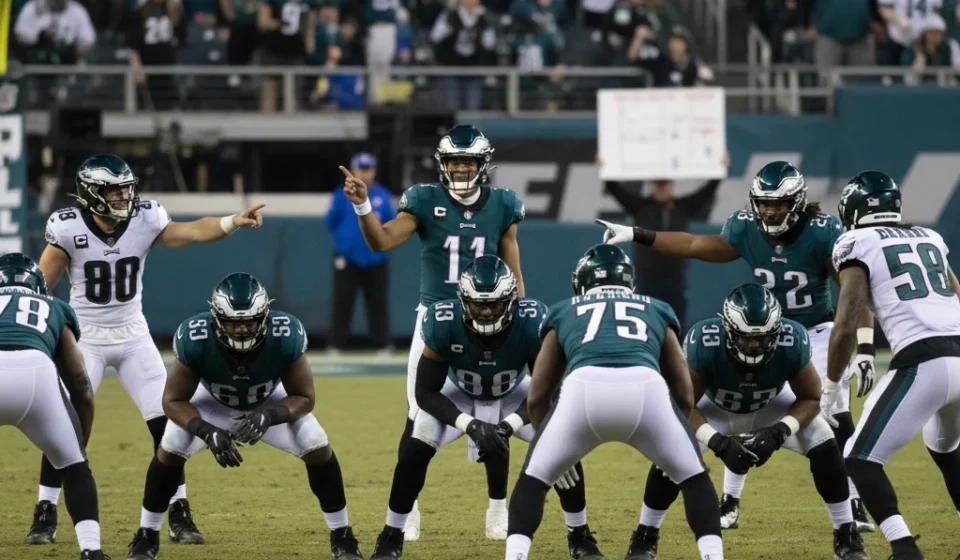

The formula for beating the Philadelphia Eagles used to be simple, if not exactly easy. You stacked the box to slow down the run, kept a safety deep to prevent A.J. Brown from taking the roof off the stadium, and prayed Jalen Hurts did not break containment.
But three weeks into the 2026 NFL season, that old scouting report is useless.
Defensive coordinators spent the offseason evolving. Now, the Eagles are seeing a sophisticated blend of post-snap rotations and disguised simulated pressures. Teams are showing blitz, dropping eight into coverage, and turning the middle of the field into a crowded, muddy mess. It is a modern defensive trap. During the opening stretch of the season, it looked like it might actually work.
“Teams are daring us to be patient,” Hurts said after a recent practice at the NovaCare Complex. “They do not want us throwing the ball over their heads. They want us to get bored, make a mistake, and force something that is not there.”
Through the first two games, the frustration was visible. The Eagles’ passing attack looked clunky, choked by two-high safety shells that refused to budge. Deep shots were scarce. Hurts was holding the ball too long, trying to create magic after the structure of the play broke down.
Then came the adjustments.
The Short Game Weapon: Saquon Barkley
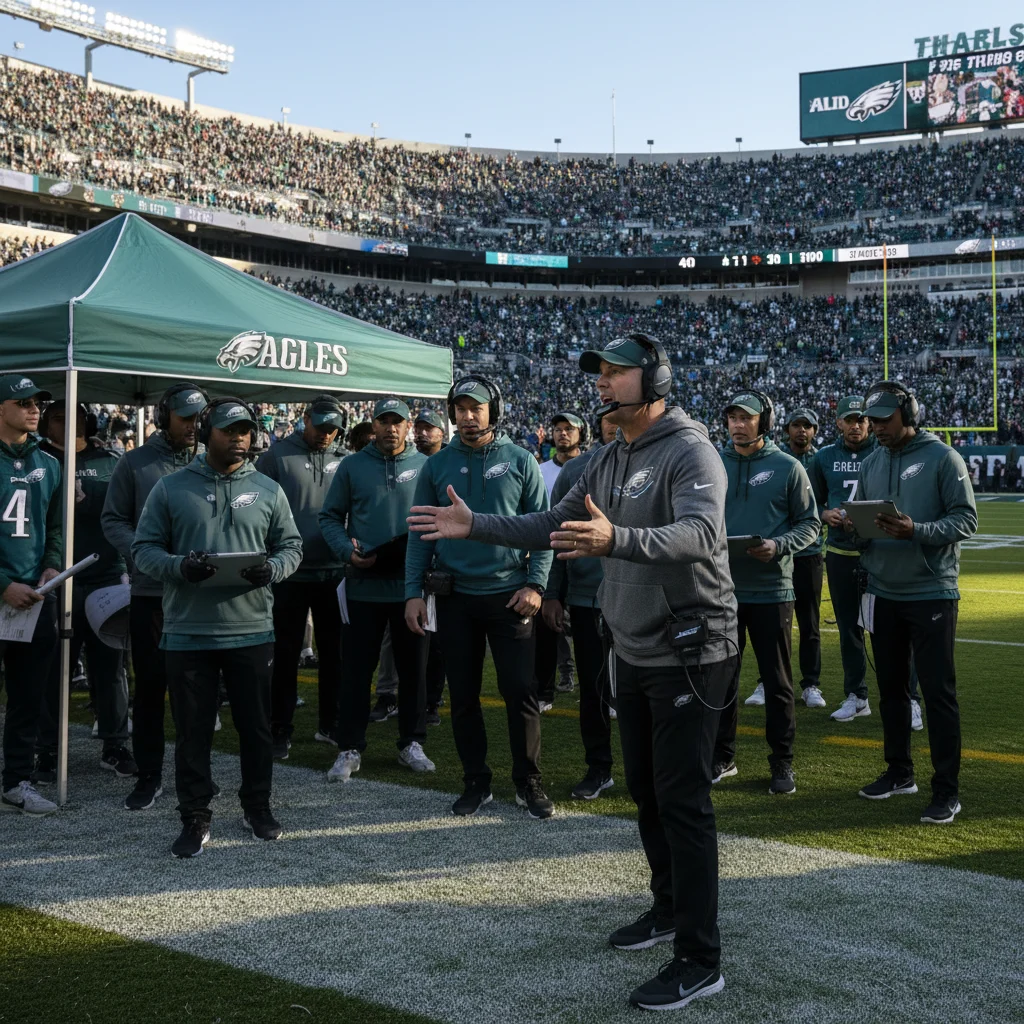
Against opponents drop-back schemes, the Eagles’ coaching staff unveiled a pragmatic counter-strategy. It was not about adding flashy new plays. Instead, it was about ruthlessly exploiting the space defenses were giving up.
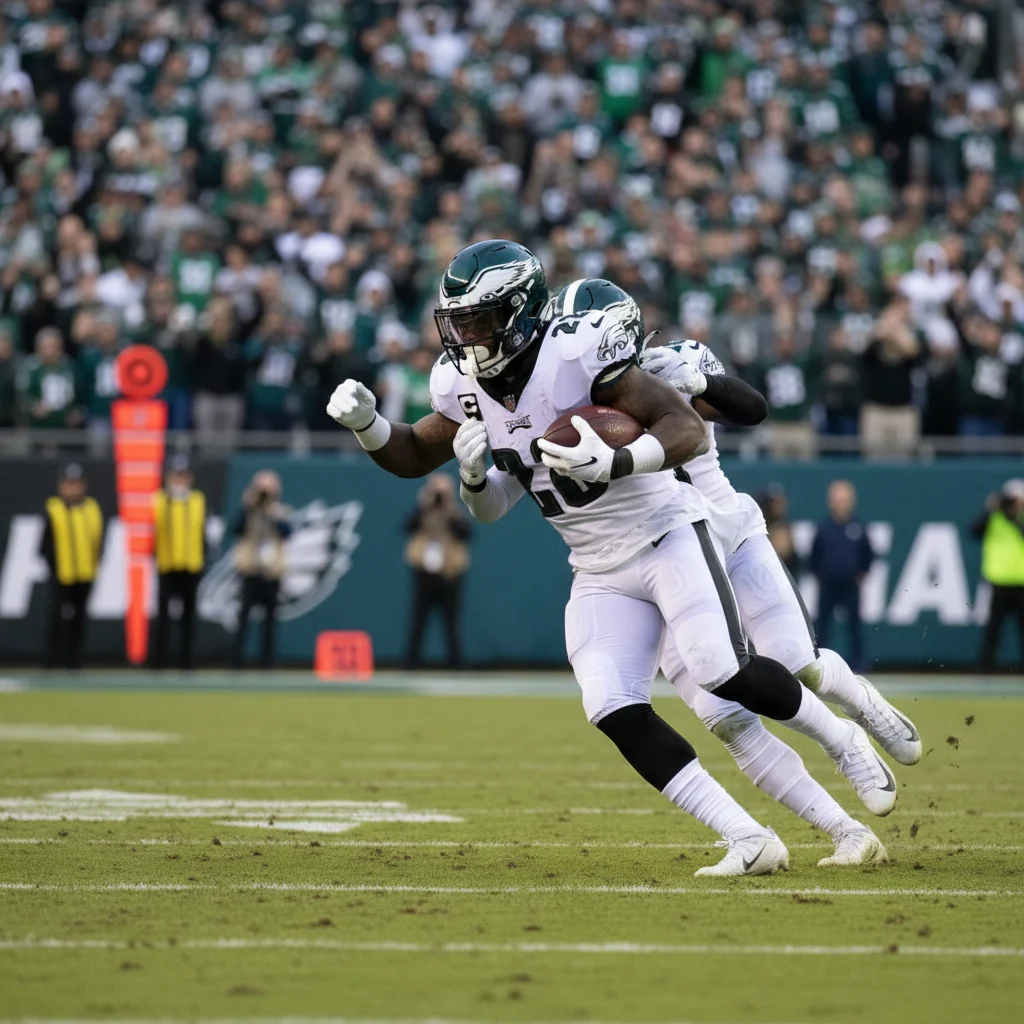
First, they unlocked Saquon Barkley in the passing game. When defenses drop seven or eight players into coverage, they leave the flats vulnerable. Hurts, who historically preferred to push the ball downfield or scramble when his primary read was covered, started checking the ball down. Barkley became a high-volume outlet, catching short passes and using his run-after-catch ability to turn three-yard checkdowns into crucial first downs.
“If they want to back up and play thirty yards off the ball, we have to make them pay underneath,” head coach Nick Sirianni explained. “It takes discipline. You have to take the boring profit. When you do that consistently, the defense has to creep up. That is when the big plays open up.”
Pre-Snap Clarity
The second major adjustment was the heavy use of pre-snap motion. By moving DeVonta Smith and Dallas Goedert across the formation before the snap, the Eagles forced opposing safeties to reveal their intentions early.
- If a defender trailed Smith, it signaled man coverage.
- If the defense shifted as a unit, it was zone.
- If the safety crept up, a blitz was likely coming from the edge.
This quick diagnostic tool gave Hurts the answers to the test before the ball was even snapped. It took the guesswork out of the post-snap puzzle.
Playing Point Guard
This shift in philosophy requires a different kind of quarterback play. It demands constraint. For Hurts, a player built on explosive plays and physical dominance, playing point guard rather than hero has been a mental hurdle. But the early returns suggest he is embracing the change. His completion percentage on passes under ten yards has spiked, and his time-to-throw numbers have dropped significantly.
This evolution is not just about survival; it is about the long game. The Eagles know that to play deep into January, their offense cannot rely on winning physical mismatches alone.
“We are growing up,” Hurts said. “Every year the league throws something different at you. You either adapt or you get left behind. We are not going to get left behind.”
There will still be afternoons where Brown and Smith run wild down the sidelines. But for now, the Eagles are proving they can win dirty, play small ball, and dissect defenses with surgical precision. It may not look like the highlight reels of years past, but it is exactly what a championship-caliber team does to survive the grind.