
Fortnite Chapter 7 is here, and it brought a massive change to how players look on the battlefield. Epic Games recently rolled out its new “AI-pattern” cosmetic system. It lets players type in text prompts to generate custom textures on their character outfits. It sounds like a dream for creative players. But for the digital art community, it is a nightmare.
The backlash started almost immediately. Within hours of the update going live, social media feeds filled with side-by-side comparisons. Artists pointed out striking similarities between the game’s generated patterns and their own copyrighted illustrations.
How the Canvas Skin Works
The technology behind the skins is simple but controversial. Players buy a base outfit, known as the “Canvas.” From there, they can use an in-game generator to overlay unique patterns. Want a neon cyberpunk grid? Or maybe a watercolor forest? The system builds it on the fly.
But how did the system learn to draw those styles? That is the question driving the current outrage.
“I logged in and saw a pattern that looked exactly like a brush pack I spent three years developing,” says Elena Rostova, a freelance concept artist who has previously done contract work for major game studios. “It is not just a coincidence. The line weights, the color blending—it is too specific. It feels like our own work is being sold back to us, and we are not seeing a dime.”
Epic Games Responds to Scraping Allegations
Rostova is not alone. Several prominent digital illustrators have threatened to boycott Epic Games. They argue that the company’s AI model must have been trained on copyrighted art scraped from the web without permission.
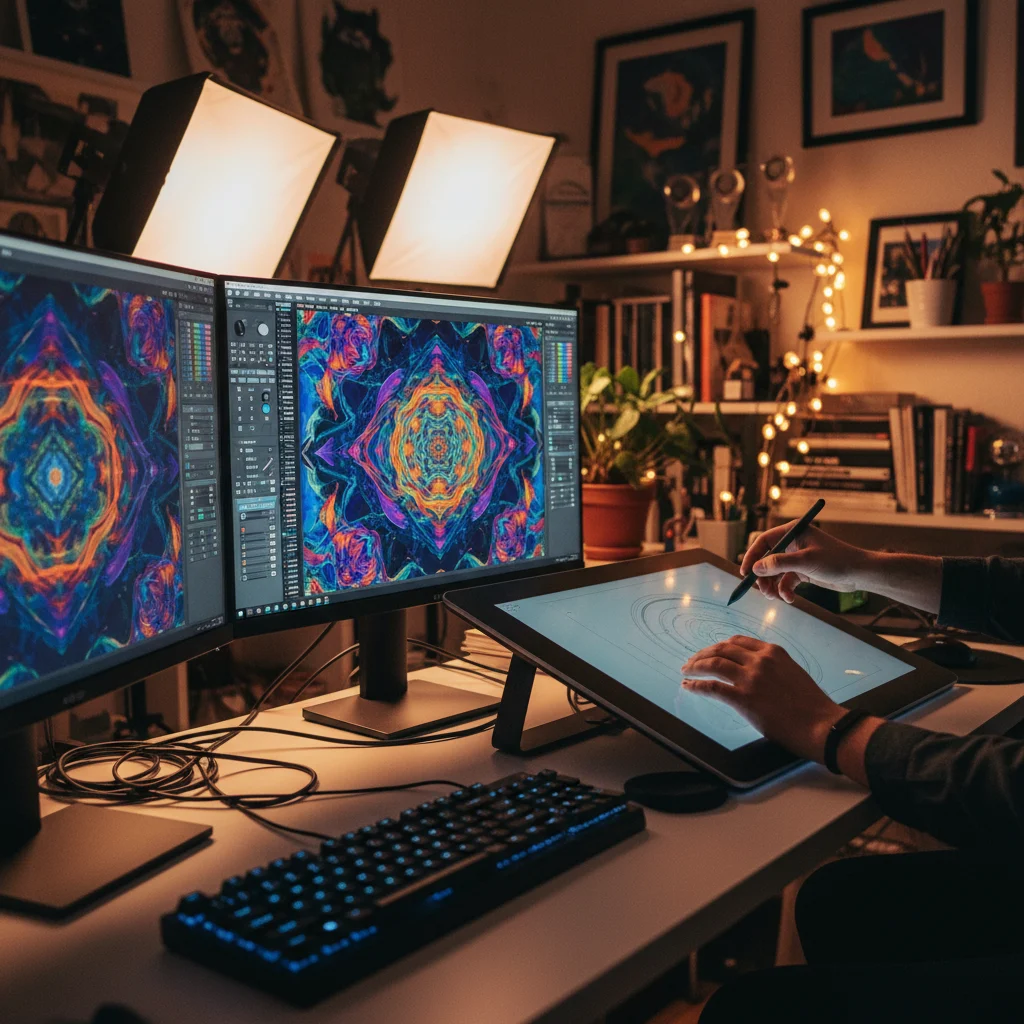
Epic Games has defended the tool. In a brief statement, the publisher insisted that the AI-pattern generator was trained strictly on proprietary assets, licensed stock libraries, and public domain images. “We take intellectual property rights very seriously,” an Epic spokesperson said. “The model used for Chapter 7’s customizable cosmetics does not scrape active art sharing platforms, nor does it use unlicensed creative work.”
Many artists remain skeptical. They point out that “licensed stock libraries” often contain stolen art uploaded by third parties. Without a fully transparent look at the training dataset, creators say Epic’s assurances mean very little.
The Broader Battle Over Generative AI
This conflict comes at a tense time for the video game industry. Generative AI tools are creeping into every stage of development, from writing dialogue to rendering background textures. Publishers see it as a massive cost-saver. Creative professionals see it as an existential threat to their livelihoods.
“If a giant like Epic can get away with this, it sets a dangerous precedent,” says tech-law expert David Vance. He has been tracking intellectual property disputes in digital spaces for a decade. “Currently, copyright law is struggling to keep pace with generative models. Legally, proving that an AI copied a specific style is incredibly difficult. Copyright protects specific expressions, not abstract artistic styles.”
This loophole leaves artists with few options. Some are calling for a formal unionization of digital concept artists, while others are pushing for new labeling laws. In the meantime, the Fortnite community remains divided. Some players love the deep customization, while others are refusing to buy the Canvas skins in solidarity with the artistic community.
As Chapter 7 rolls on, the pressure on Epic is mounting. What was meant to be a showcase of cutting-edge technology has instead reopened a fierce ethical debate. The gaming industry is watching closely. How Epic handles this dispute could shape the future of digital art and game design for years to come.
