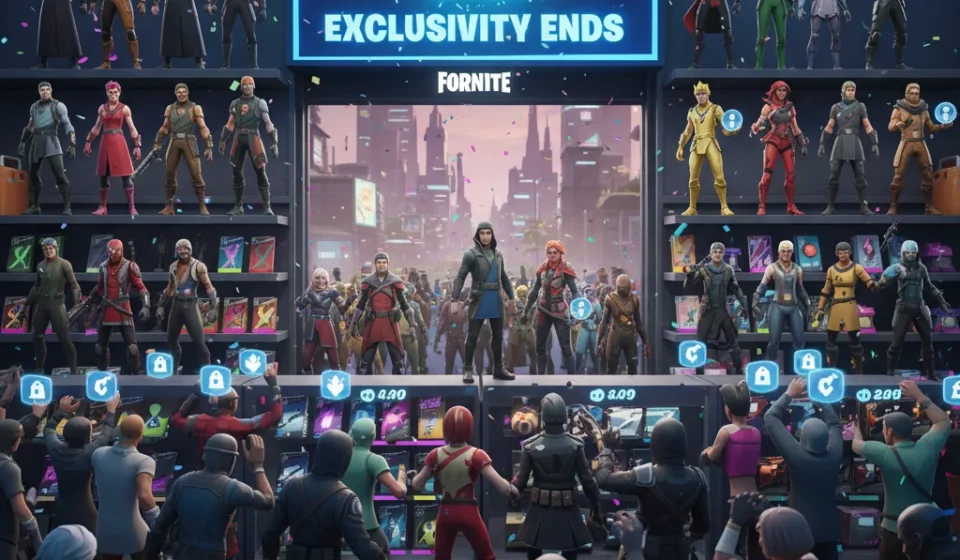

Fortnite’s virtual vault is finally cracking open. This week, Epic Games began rolling out the very first Battle Pass cosmetics to the general Item Shop, marking a major milestone for the world’s most popular battle royale. It has been a long 18 months. Back in late 2024, Epic made a quiet but revolutionary policy shift: future Battle Pass items would no longer be locked away forever. Now, the clock has finally run out on that first wave of exclusivity.
For years, Fortnite thrived on FOMO—the fear of missing out. If you did not play during a specific three-month season, you missed your chance. Popular characters, unique emotes, and creative gliders were locked away in a digital tomb. If you started playing late, or simply had real-life commitments that kept you away from the screen, you were out of luck. But that old era is officially dead. Or, at the very least, heavily modified.
The End of Permanent Exclusivity
The policy shift started back in August 2024. Epic Games announced that, starting with Chapter 5 Season 4, items included in new Battle Passes could eventually enter the Item Shop. The catch was a strict timeline. Epic promised that these items would remain exclusive for at least 18 months after a season ended. That buffer gave dedicated players a long period of bragging rights. It also protected the value of the initial Battle Pass purchase.
Now that the calendar has caught up, those late-2024 cosmetics are fair game. Players are seeing skins, back blings, and harvesting tools return to the shop rotation. It is a massive shift in how the game handles rarity, and it is already changing how players view their digital lockers.
Why Epic Made the Pivot
Why did Epic Games decide to abandon a strategy that drove millions of players to play every single day? The answer is a mix of player satisfaction and long-term business strategy. There are several key factors driving this change:
- Collaborative IP constraints: Brands like Marvel, Disney, and Star Wars want their characters accessible to new players. Under the old system, a kid starting Fortnite today could never play as classic Darth Vader or Spider-Man.
- New revenue streams: Selling older Battle Pass items individually allows Epic to monetize past content without creating assets from scratch.
- Player retention: Reducing the brutal grind makes the game more welcoming to casual fans who cannot commit to finishing a pass every season.
Epic was careful to note that not every single item is guaranteed to return. The developers hold the right to bring back what they want, when they want. However, the door is now wide open.
A Question of Pricing and Rarity
While some collectors are annoyed, most of the community has welcomed the change. Under the old system, a full Battle Pass cost 950 V-Bucks—roughly eight to nine dollars. For that price, players could earn up to 100 different cosmetic rewards by playing.
The Item Shop, however, is a different beast. Buying a single returning skin can cost anywhere from 1,200 to 2,000 V-Bucks. Epic is making sure that buying the Battle Pass remains by far the best deal. You can get the items early and incredibly cheap, or you can wait a year and a half and pay premium individual prices in the shop. It is a clever compromise that respects the time of daily players while still catering to latecomers with deep pockets.
As the first wave of late-2024 cosmetics trickles into the daily shop rotation, Fortnite enters a new era. The game is no longer built entirely on artificial scarcity. Instead, it is focusing on accessibility, ensuring that some of its best digital designs are not lost to time.
