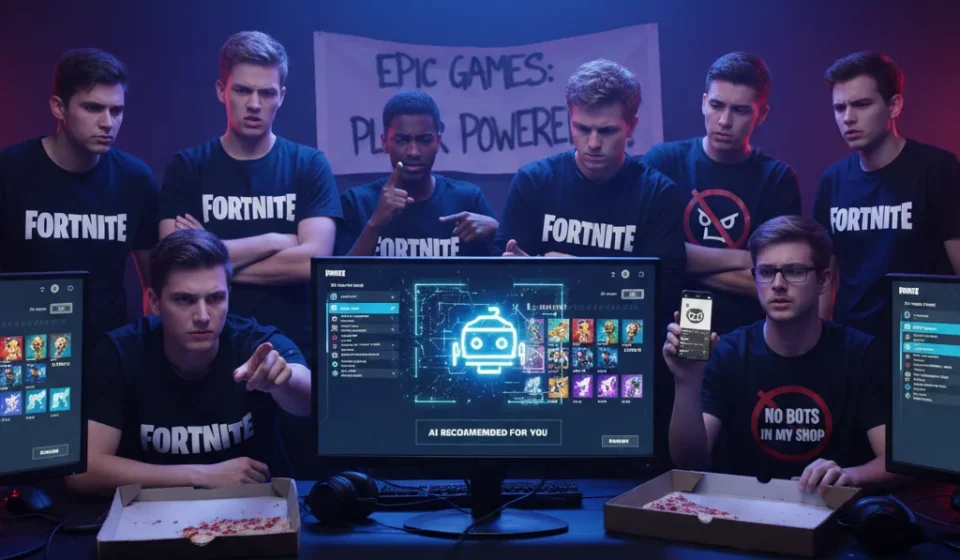

A Storefront Tailored Just for You?
Epic Games is facing a fresh wave of player anger. This time, the controversy is not about weapon balancing, map updates, or live event server crashes. Instead, the community is pushing back against a quiet but significant update to Fortnite’s in-game Item Shop: a new personalized tab called “My Shop.”
Launched without a massive marketing campaign, “My Shop” uses machine-learning algorithms to curate a unique selection of cosmetics for every individual player. The system analyzes what you buy, how you play, and which skins you equip most often. It then serves up targeted items it thinks you cannot resist. While Epic likely envisioned this as a helpful quality-of-life update, players are calling it something else entirely. To many, it feels like a highly sophisticated, predatory sales tactic designed to exploit personal gaming habits.
How the Algorithm Pulls the Strings
For years, the Fortnite Item Shop operated on a shared, global rotation. Every player across the globe saw the exact same skins, gliders, and emotes at any given moment. This shared experience created a sense of community. Players would log on at daily reset times to discuss what returned to the shop and what stayed in the vault.
The “My Shop” tab changes that dynamic completely. By utilizing player-specific data, the game can now pinpoint exactly what a user might want. Did you recently play a dozen matches using a Marvel skin? The algorithm might suddenly offer you a matching Marvel glider or back bling. Have you been eyeing a specific anime emote for months? Do not be surprised if it mysteriously appears in your personal tab. It is microtransactions on a highly individualized scale.
Critics argue that this level of targeting goes too far. “It feels incredibly invasive,” wrote one Reddit user in a thread discussing the update. “It is one thing to browse a general catalog. It is another thing entirely when an AI is actively analyzing your weaknesses to get you to spend real money.”

The Psychological Trap of Personalized FOMO
The core of the backlash lies in the psychological mechanisms behind modern gaming monetization. Fortnite already relies heavily on FOMO—the fear of missing out. Because items rotate out of the shop quickly, players feel pressured to buy them immediately before they vanish for months, or even years.
By adding an AI-driven personalized tab, Epic Games has supercharged this pressure. When the game presents an item you specifically want, the urge to purchase spikes. This raises ethical questions, particularly because Fortnite’s player base skews heavily toward children and teenagers. Younger players may lack the impulse control or financial literacy to resist these hyper-targeted pitches.
Industry watchdogs have long warned about the dangers of algorithmic storefronts in gaming. Critics compare the practice to social media feeds that are designed to keep users hooked. In this case, the feed is not showing you posts—it is showing you digital goods that cost real money. The fear is that this could open the floodgates for even more aggressive monetization strategies across the entire gaming industry.
Not the First Shop Controversy
This is not the first time Epic Games has tinkered with Fortnite’s economy to the dismay of its community. Earlier this year, the developer faced severe backlash when it decided to remove the color-coded rarity system for skins and cosmetics. Players accused Epic of trying to hide the true value of items to justify higher prices. That decision, combined with the rising cost of V-Bucks, has left a sour taste in the mouths of many long-time fans.
So far, Epic Games has not issued a formal response to the outcry over “My Shop.” The feature remains active in the game, and it is unclear if the developer has any plans to walk it back or offer players an opt-out toggle. For now, the community’s best advice to one another is simple: turn a blind eye to the personalized recommendations and keep a tight grip on your wallet.