

The race to the FNCS 2026 Global Championship just got a lot more complicated. For years, professional Fortnite coaches spent sleepless nights manually mapping out enemy drop spots, tracing rotation paths on makeshift digital whiteboards, and guessing where rivals might move. Not anymore. The launch of Fortnite Tracker’s new AI-powered “Match Predictor” tool has thrown a massive wrench into traditional scouting, forcing teams to change how they prepare for the biggest tournament of the year.
This isn’t just another stat tracker. The new system uses machine learning algorithms trained on millions of matches, real-time player telemetry, and historic storm circle data. It aims to predict lobby dynamics before the battle bus even leaves the runway.
The Power of Predictive Data
“We used to rely on gut feelings and basic heatmaps,” says Marcus “Solace” Vance, a veteran coach currently preparing three duos for the global stage. “Now, this tool tells us that if we drop at a specific point and the zone pulls south-east, we have a 14% chance of running into Team Falcon at the third minute. That kind of precision changes everything.”
The tool, developed by Tracker Network, analyzes a massive web of variables. It factors in individual player tendencies, historical performance under pressure, loot spawn rates, and even minor patch adjustments. By processing this data instantly, the Match Predictor gives analysts a simulated breakdown of how a lobby might collapse during any given match.
Sarah Lin, Lead Data Scientist at Tracker Network, explains that building the predictor was a massive challenge. “Fortnite is incredibly chaotic because of the building and editing mechanics,” Lin says. “But patterns always emerge. By analyzing thousands of high-level lobbies, our AI learned to spot where players bottleneck during rotations. It can predict where fights will break out with surprising accuracy.”
Coaches Adapt to the Machine
This predictive power has triggered a quiet arms race among FNCS analysts. Teams that once kept their strategies close to their chests find themselves exposed. If an opponent knows exactly which mountain your team prefers to hold during a half-and-half zone, they can easily set up an ambush.
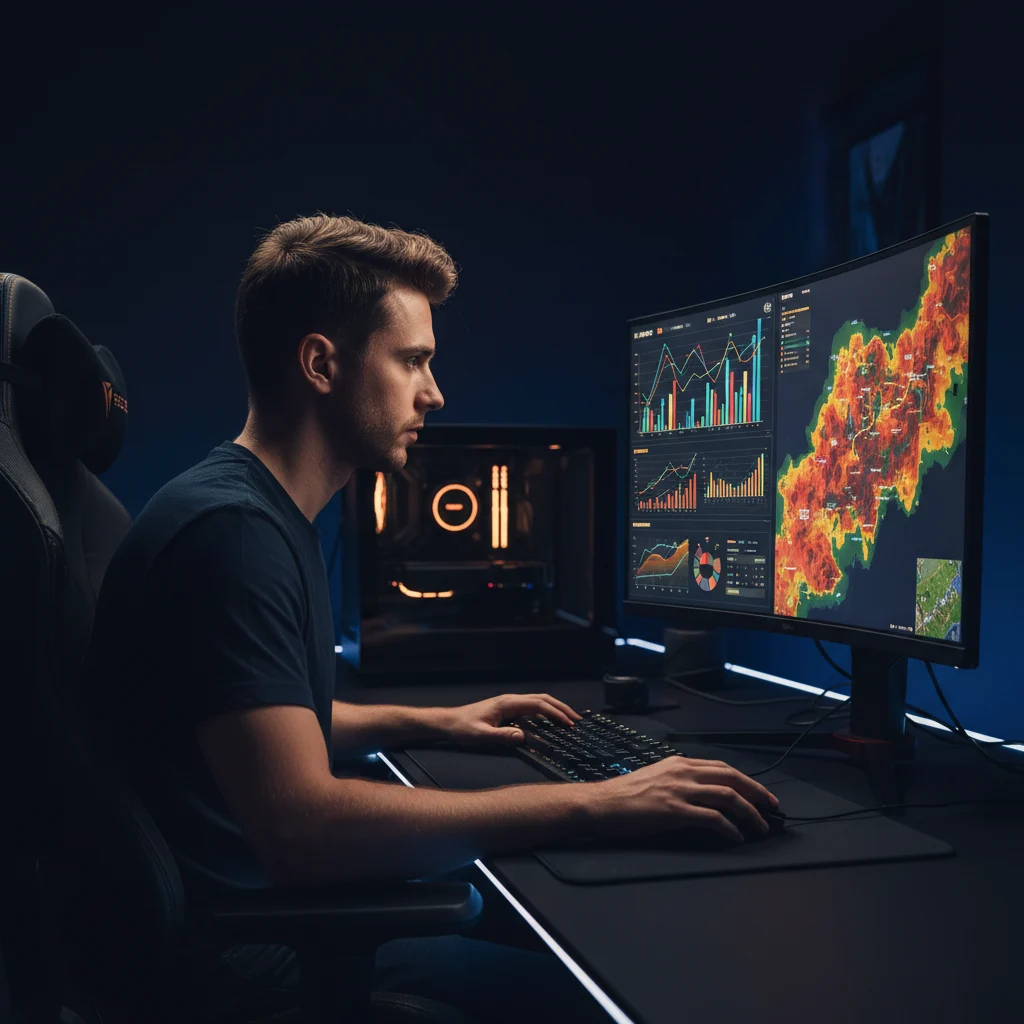
As a result, some pros are deliberately playing unpredictably in scrims. They want to feed the AI bad data.
“We’re seeing teams change their drop spots every three games during practice,” Vance says. “They’re trying to throw off the algorithm. It’s a game of cat and mouse, but the cat has supercomputing power.”
Is the Human Element Dying?
Still, not everyone believes the machine holds all the answers. Skeptics argue that relying too heavily on predictive modeling can paralyze players on the field. When a storm surge hits and the lobby goes chaotic, rigid plans often fall apart.
“AI can’t calculate human panic,” says former FNCS finalist turned analyst, David “Aqua” Cole. “It doesn’t know if a fifteen-year-old kid is shaking because he’s one placement point away from winning a million dollars. Sometimes, the most logical rotation isn’t the one a human player will choose under extreme pressure.”
The shift is also affecting how fans and commentators digest the game. Broadcast analysts are starting to use the Match Predictor to give viewers real-time odds during live matches. It adds a layer of depth similar to traditional sports broadcasting, where fans can see the probability of a team surviving a difficult rotation.
“It makes the broadcast much more engaging,” Cole adds. “When the screen says a duo only has a 5% chance of making it to the moving zones, and then they actually pull it off, it makes the moment feel even more heroic.”
Whether this technology ultimately helps or hurts the competitive integrity of the game remains a hot debate. But one thing is clear: the era of relying solely on raw mechanical skill and luck is over. As the championship approaches, the teams that learn to balance raw human instinct with cold, calculated machine intelligence will likely be the ones standing on the podium.