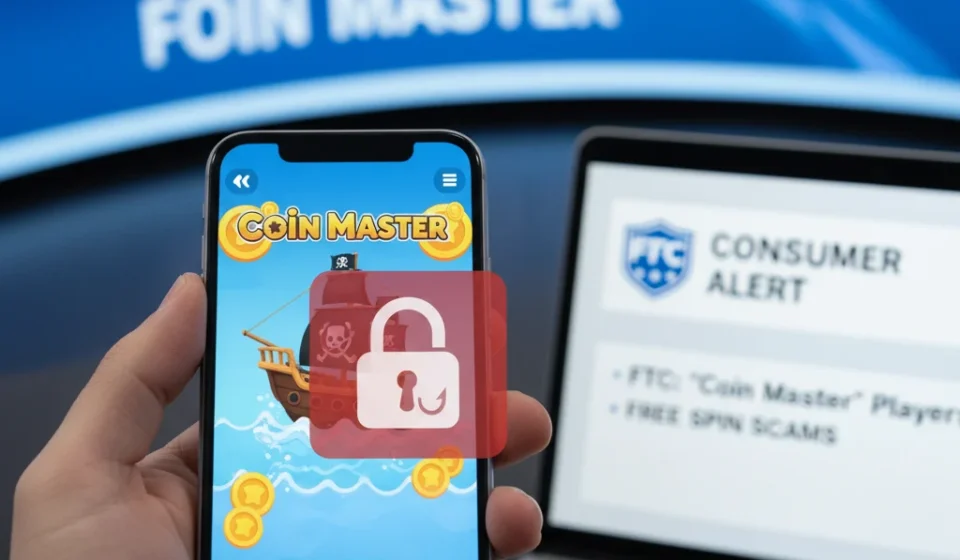

Mobile gaming is supposed to be a harmless distraction. But right now, for millions of American players, it is turning into a costly security hazard.
The Federal Trade Commission (FTC) issued a stark warning this week targeting fans of the wildly popular mobile game Coin Master. According to federal regulators, a massive wave of phishing scams has cropped up this autumn. These schemes are specifically designed to trick players into giving up their personal data and financial information in exchange for fake in-game rewards.
The hook is simple but highly effective: free spins.
The Temptation of the Free Spin
In Coin Master, spins are everything. Developed by Moon Active, the casual game requires players to spin a virtual slot machine to win coins, attack rival villages, and shield their own virtual bases from other players. When players run out of spins, they either have to wait hours for a slow recharge or spend real-world money. That bottleneck creates a desperate demand among the game’s active fanbase.
Scammers are capitalizing on this exact frustration. The FTC reports that bad actors are flooding social media platforms—including Facebook, X, TikTok, and Discord—with posts promising hundreds of free spins. These links often look incredibly convincing, sometimes mimicking official Moon Active promotions, using stolen logos, or pretending to be community giveaways.
But clicking them leads down a dangerous path.
How the Phishing Scheme Works
Once a player clicks on one of these fraudulent links, they are usually redirected to a sophisticated spoof website. These third-party sites are built to look identical to the official Coin Master portal or secure login pages for Google Play and the Apple App Store.
From there, players are prompted to enter their login credentials, link their social media profiles, or even provide credit card details under the guise of verifying their age or identity. In some cases, the sites attempt to download malware directly onto the user’s smartphone while they wait for the “free” reward to load.
The consequences can be devastating. Within minutes, victims find themselves locked out of their gaming accounts. Even worse, hackers can gain access to the digital wallets and credit cards linked to their mobile app stores, leading to unauthorized charges that can add up to thousands of dollars in a matter of hours.
A Rising Tide of Autumn Scams
According to the FTC’s data, complaints regarding mobile gaming scams have surged by over 40% since the start of September 2026. The agency notes that casual games like Coin Master are particularly attractive targets because they draw a diverse demographic. This includes older adults and young children who may not be as familiar with modern cybersecurity threats or the telltale signs of a phishing campaign.
“Cybercriminals go where the crowd is, and right now, they are hiding in the comment sections of mobile gaming communities,” said an FTC cybersecurity analyst in an official statement. “These scams are highly targeted, seasonal, and incredibly predatory because they exploit the psychological urgency built into the games themselves.”
Moon Active does occasionally distribute genuine free spin rewards, but these are only shared through verified social media accounts with official verification badges or directly inside the game’s secure inbox. They never require players to log in via external websites or provide sensitive banking details.
How to Protect Your Account and Wallet
The FTC and cybersecurity experts advise Coin Master players to stick to a few strict rules to protect their accounts and wallets:
- Only use official channels: Never trust links shared in public comment sections, unauthorized forums, or direct messages from players you do not know.
- Never share login details: No legitimate game developer or customer service representative will ever ask for your password, recovery keys, or verification codes.
- Inspect the URL closely: Before typing any information, look closely at the address bar. Fraudulent sites often use slight misspellings of “Coin Master” or “Moon Active” to trick the casual observer.
- Secure your accounts: Enable two-factor authentication (2FA) on your app store accounts, email, and social media profiles linked to your games.
If you believe you have already fallen victim to one of these scams, the FTC urges you to change your passwords immediately, contact your bank or credit card company to freeze any unauthorized charges, and report the fraudulent links directly to the FTC at ReportFraud.ftc.gov.
Gaming should be about relaxing and having fun. Taking an extra five seconds to verify a link before clicking can keep it that way.