
A long-standing water-sharing arrangement between India and Pakistan is facing its most serious test in six decades. Diplomatic exchanges between New Delhi and Islamabad have intensified over India’s formal demand to renegotiate the 1960 Indus Waters Treaty (IWT), even as international legal proceedings over two major hydroelectric dams grind on.
The standoff centers on differing interpretations of how the treaty should handle disputes, alongside growing resource demands on both sides of the border. While India argues that the pact must adapt to new demographic and environmental realities, Pakistan maintains that the existing text provides adequate safeguards and cannot be altered unilaterally.
Two Projects at the Heart of the Rift
The immediate friction stems from two Indian run-of-the-river hydroelectric installations in Jammu and Kashmir: the 330-megawatt Kishanganga project on a tributary of the Jhelum River, and the 850-megawatt Ratle plant on the Chenab River.
Under the 1960 accord brokered by the World Bank, Pakistan holds primary rights over the waters of the three western rivers—the Indus, Jhelum, and Chenab. India has unrestricted use of the three eastern rivers—the Sutlej, Beas, and Ravi. However, the agreement permits India to build run-of-the-river hydroelectric plants on western tributaries, provided the designs adhere strictly to specific technical criteria regarding storage, spillways, and pondage.
Islamabad has objected to the design specifications of both Kishanganga and Ratle for years. Pakistani officials argue that the underwater gates, reservoir levels, and sediment outlets could give India the capability to manipulate river flows downstream, potentially affecting agriculture in Punjab and Sindh provinces. New Delhi rejects these assertions, insisting the designs comply fully with the treaty’s engineering parameters.
The Battle Over Parallel Legal Tracks
Efforts to resolve the disagreement have fractured the treaty’s dispute mechanism. Under the agreement, technical differences are meant to follow a graded path: first through the bilateral Permanent Indus Commission, then to an independent Neutral Expert, and finally, if unresolved, to a Court of Arbitration.
In 2016, Pakistan requested the establishment of an ad hoc Court of Arbitration through the Permanent Court of Arbitration (PCA) in The Hague. India, arguing that the technical issues fell short of a full legal dispute, asked the World Bank to appoint a Neutral Expert instead.
The World Bank initially paused both processes to encourage a mutual settlement. After years of diplomatic deadlock, the Bank lifted the pause in late 2022, simultaneously appointing Michel Lino as the Neutral Expert and Sean Murphy as chairman of the Court of Arbitration.
New Delhi strongly opposed this dual-track approach, contending that concurrent proceedings could produce contradictory rulings and destabilize the treaty’s framework. India has actively participated in the Neutral Expert hearings but has boycotted proceedings before the Court of Arbitration. In mid-2023, the Court of Arbitration issued an interim award affirming its own jurisdiction to hear the matter, a ruling that India dismissed as incompetent and unauthorized.
Why New Delhi Wants to Reopen the 1960 Text
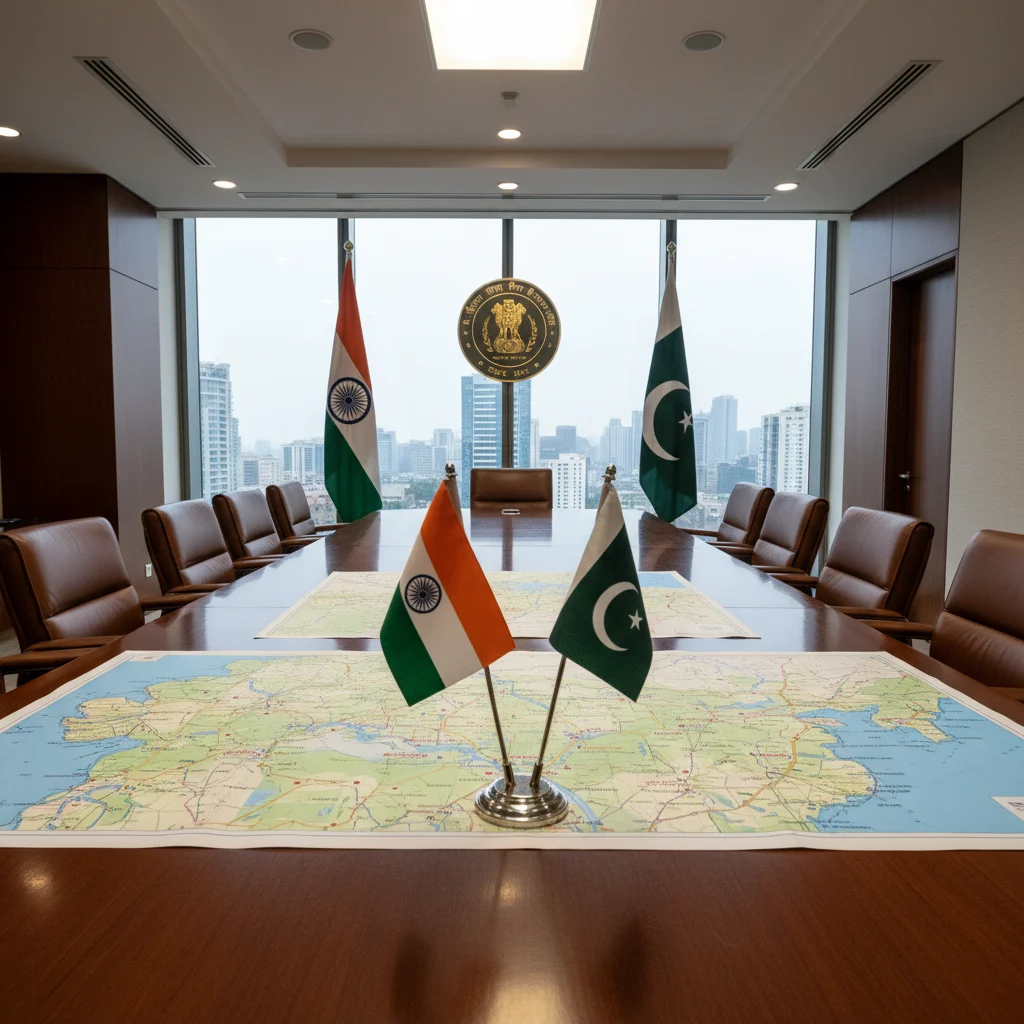
Frustrated by the procedural impasse, India served a formal notice to Pakistan under Article XII(3) of the treaty, seeking government-to-government negotiations to amend the agreement. It marked the first time India had invoked this provision since the treaty was signed in Karachi in September 1960.
Indian diplomats have outlined several core reasons for seeking changes:
- Demographic shifts: India’s population in the Indus basin has surged dramatically since 1960, driving up domestic water and energy demands.
- Clean energy targets: India seeks to accelerate renewable power generation in the Himalayan region, which requires clearer leeway for run-of-the-river projects.
- Dispute mechanism flaws: New Delhi argues that Pakistan’s move to bypass the Neutral Expert stage in favor of arbitration exposed structural weaknesses in the treaty’s conflict-resolution design.
- Security context: Cross-border tensions and broader bilateral relations have altered the political backdrop against which the treaty originally functioned.
India followed up with further communications urging Islamabad to begin formal talks within 90 days. New Delhi insists that the treaty cannot remain frozen in time while the ground realities across the basin transform.
Islamabad’s Stance and Water Security Fears
Pakistan has approached India’s revision notices with deep caution. In its official replies, Islamabad conveyed a willingness to discuss Indian concerns, but only within the established framework of the Permanent Indus Commission rather than through open-ended treaty renegotiations.
For Pakistan, the Indus system is an existential lifeline. Over 80 percent of its irrigated farmland depends directly on the Indus basin, supporting food production for more than 240 million people. Policymakers in Islamabad worry that reopening the treaty text could weaken the guarantees that have protected their downstream water rights through three major wars and numerous border skirmishes.
Pakistani officials also point out that the treaty already contains dispute-resolution mechanisms designed to resolve technical questions without overhauling the entire legal pact. They argue that altering the foundational river allocations would set a destabilizing precedent for cross-border water management throughout South Asia.
Climate Pressures on an Aging Agreement
Beyond legal maneuvering, environmental scientists note that the Indus basin is under growing stress from climate change. Himalayan glaciers feeding the river network are retreating at accelerated rates, causing erratic seasonal runoffs, extreme flash floods, and extended dry spells.
The 1960 treaty was negotiated using hydrological data from the mid-twentieth century and makes no explicit provision for joint ecological management, climate resilience, or groundwater depletion. Both nations rely heavily on the same water table, yet the treaty offers little guidance on shared aquifer conservation.
For now, diplomatic channels remain narrow. India continues to press for structured revision talks, while Pakistan insists on adjudicating its technical complaints through international legal forums. How the two nuclear-armed neighbors manage this dispute could decide whether one of the world’s most durable transboundary water treaties survives into the decades ahead.
