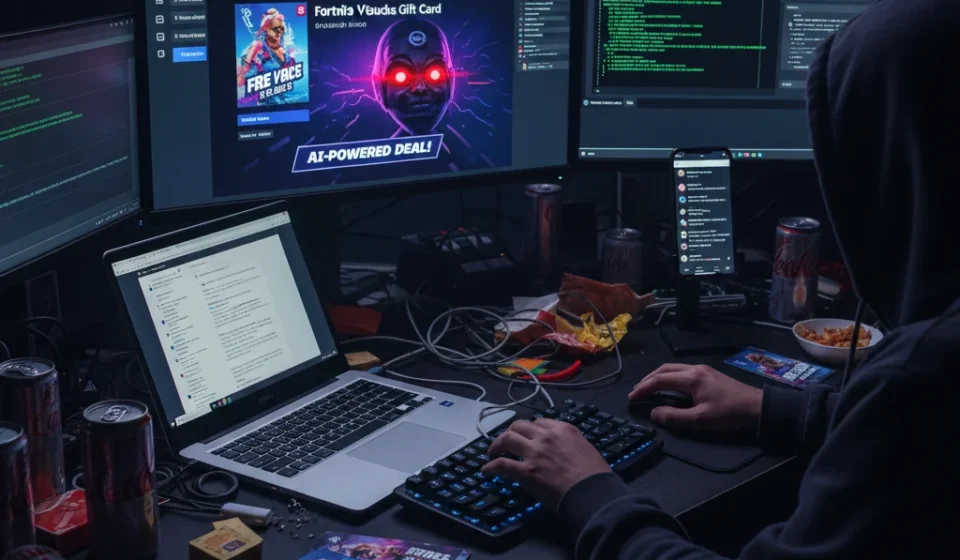

Holiday shopping has started early this year, and for millions of parents, Fortnite V-Bucks are at the top of the shopping list. But cybersecurity experts are warning of a highly sophisticated scam spreading across TikTok Shop. Fraudsters are using generative AI to clone physical Fortnite gift cards and run automated storefronts targeting unsuspecting parents looking for a discount.
The scam is remarkably effective because it blends digital deception with physical product delivery. Buyers think they are getting a legitimate, physical gift card shipped to their door. Instead, they receive a piece of plastic that has already been rendered completely useless.
The Anatomy of the TikTok Shop Scam
It starts on the TikTok feed. Users come across short videos featuring popular gaming influencers promoting massive discounts on physical Fortnite V-Bucks cards. The catch? These videos are often deepfakes. Scammers use AI voice-cloning tools and video manipulation to make it look like famous streamers are endorsing their TikTok Shop.
“We are seeing a massive surge in automated storefronts,” says David Miller, a lead threat analyst at security firm SentinelPrime. “These aren’t solo scammers working out of a bedroom. They are using AI to spin up dozens of fake TikTok Shops in minutes, complete with AI-generated product descriptions, reviews, and video ads.”
How the Gift Cards Are Cloned
But the real trick lies in how the physical cards are cloned. According to security researchers, scammers purchase legitimate Fortnite gift cards from retail stores. Before putting them on the shelves or selling them, they use specialized AI-powered OCR (optical character recognition) software and predictive algorithms.

These algorithms analyze the sequence of the card numbers and the barcodes. In some cases, scammers physically copy the barcodes of unactivated cards in retail stores, print them onto counterfeit cards, and sell those counterfeits on TikTok Shop. When a customer buys the card online, the scammers wait for the shipment to arrive. Once the package is marked as delivered, an automated AI script constantly checks the activation status of the code. The moment the card is officially activated at a register or through a digital system, the script redeems the V-Bucks instantly, leaving the buyer with an empty card.
In other variations, the cards sent to buyers are simply cheap counterfeits with cloned barcodes of cards that have already been activated and drained elsewhere. Because the buyers receive a physical card in a sealed package, they do not realize they have been conned until they try to redeem the code on their console or computer. By then, the TikTok Shop that sold it has vanished.
The Battle Against Automated Fraud
TikTok has been actively removing these fraudulent shops, but the sheer speed of AI-driven automation makes it a game of digital whack-a-mole. As fast as one shop is banned, scammers use automated tools to launch three more under different names.
How to Protect Yourself This Holiday Season
To avoid falling victim to these holiday scams, experts recommend adhering to a few strict rules:
- Only purchase Fortnite gift cards directly from official, authorized retailers like Epic Games, Amazon, Target, or Walmart.
- Be skeptical of any deal that seems too good to be true. Legitimate V-Bucks cards are rarely discounted by more than a few percentage points.
- Watch out for synthetic-looking videos on TikTok. If the audio sounds slightly robotic or the speaker’s mouth movements do not quite match their words, it is likely an AI-generated scam.
- Avoid buying gift cards from third-party sellers on social media marketplaces, even if the platform offers buyer protection.
As the holiday rush intensifies, security professionals warn that Fortnite is just the beginning. Similar AI-cloning tactics are expected to target Roblox gift cards, Nintendo eShop codes, and PlayStation Network cards in the coming weeks. For parents, sticking to trusted brick-and-mortar stores or official digital storefronts remains the safest bet to keep their holiday shopping secure.
