A relentless series of online bomb hoaxes targeting Air India Express has pushed Indian aviation authorities and cybercrime units into a high-stakes investigation. Over recent weeks, anonymous accounts across social platforms have issued dozens of alarming threats, forcing pilots into unscheduled landings, triggering bomb disposal protocols, and stranding thousands of travelers across domestic and international hubs.
Aviation security experts note that while every single warning has turned out to be false, standard operating procedures leave zero room for hesitation. Once an alert is flagged, the machinery of aviation defense moves fast.
The Anatomy of a Security Scramble
The moment a threat surfaces online—often posted on platforms like X or sent via untraceable email services—the airport’s Bomb Threat Assessment Committee (BTAC) convenes immediately. This emergency panel includes representatives from the Central Industrial Security Force (CISF), the Bureau of Civil Aviation Security (BCAS), airline station managers, and local police.
The committee must grade the threat as either specific or non-specific. Given the current climate, even vaguely worded posts are being treated as serious risks.
When a mid-flight warning is classified as actionable, air traffic controllers reroute the aircraft to the nearest designated airport equipped with isolation bays. Once wheels touch the tarmac, the plane taxies to a remote corner of the airfield, far from passenger terminals and other aircraft.
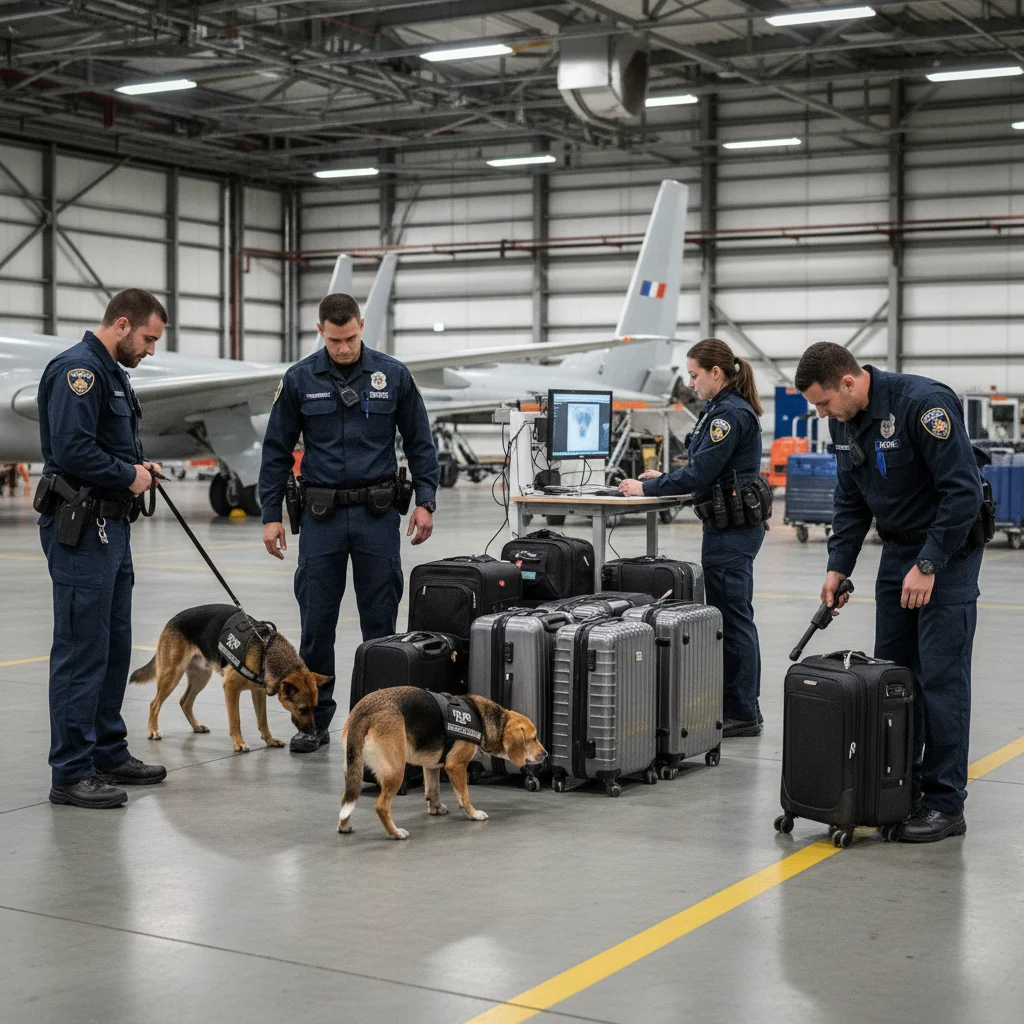
Passengers are evacuated down mobile stairs or emergency slides, leaving all hand luggage behind. Bomb disposal squads, sniffer dog units, and CISF commandos then begin a painstaking search. Every seat, galley cart, overhead bin, cargo hold, and checked bag must undergo complete anti-sabotage screening. A full sweep often takes anywhere from six to twelve hours.
The Heavy Toll on Airline Operations
For budget carriers like Air India Express, which operate tight schedules with minimal ground turnaround times, the disruptions have been brutal. A single diverted Boeing 737 disrupts not just one route, but four or five subsequent sectors scheduled for the same airframe.
The financial losses mount rapidly. Diverting a commercial flight burns extra jet fuel and often forces pilots to dump fuel before an overweight emergency landing. Airlines face steep unscheduled landing fees, ground handling charges, and hotel accommodation costs for stranded passengers. Furthermore, strict Flight Duty Time Limitations (FDTL) mean flight crews frequently run out of allowable working hours mid-crisis, requiring replacement pilots and cabin crew to be flown in from other bases.
Industry analysts estimate that a single emergency diversion can cost an airline between 3 million and 30 million Indian rupees, depending on whether the incident occurs domestically or at an overseas transit hub in the Gulf region.
Cyber Investigators Hunt for Digital Footprints
Behind the scenes, specialized cyber police teams across multiple Indian states are working to identify the individuals behind the wave of intimidation. The task is complicated by sophisticated evasion tactics.
Investigating officers report that many offending accounts were created mere hours before posting the threats. The perpetrators frequently use Virtual Private Networks (VPNs), dark web routing, and disposable international numbers to mask their actual IP addresses and physical locations.
Indian law enforcement agencies have formally reached out to international tech companies and foreign police bodies through Interpol channels. They are seeking server logs, registration metadata, and subscriber identities. Several minors and young adults have already been questioned in isolated incidents, with motives ranging from seeking viral attention to personal grievances, but authorities are also examining whether coordinated networks are systematically testing aviation response systems.
Stricter Laws and No-Fly Bans on the Horizon
In response to the unprecedented surge in disruptions, India’s Ministry of Civil Aviation has moved to overhaul existing regulations to impose harsher penalties on hoax callers.
Proposed legislative amendments aim to make digital bomb hoaxes a cognizable, non-bailable offense under anti-terror provisions and civil aviation protection laws. Crucially, authorities are drafting rules to automatically place verified hoax perpetrators on the national no-fly list, barring them from commercial aviation for life.
Government officials have reiterated that digital anonymity will not protect offenders from criminal liability. As technology firms face mounting pressure to accelerate data sharing during emergency inquiries, aviation security bodies are refining threat-grading algorithms to spot automated bot activity and reduce the operational drag on innocent passengers.
Restoring Confidence in the Air
Despite the disruptions, airline executives and security officials emphasize that safety protocols remain uncompromising. Air India Express has continued to cooperate with local and international security agencies to verify every flight’s integrity before departure.
For passengers, the immediate advice remains straightforward: arrive at airports with ample time, cooperate fully during enhanced gate-side bag checks, and report suspicious social media activity directly to airport authorities rather than amplifying unverified claims online.