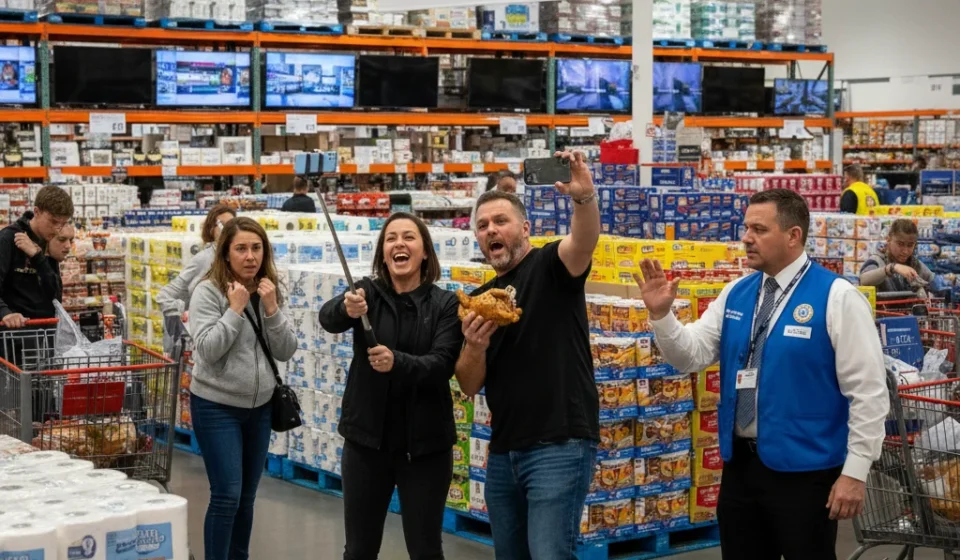

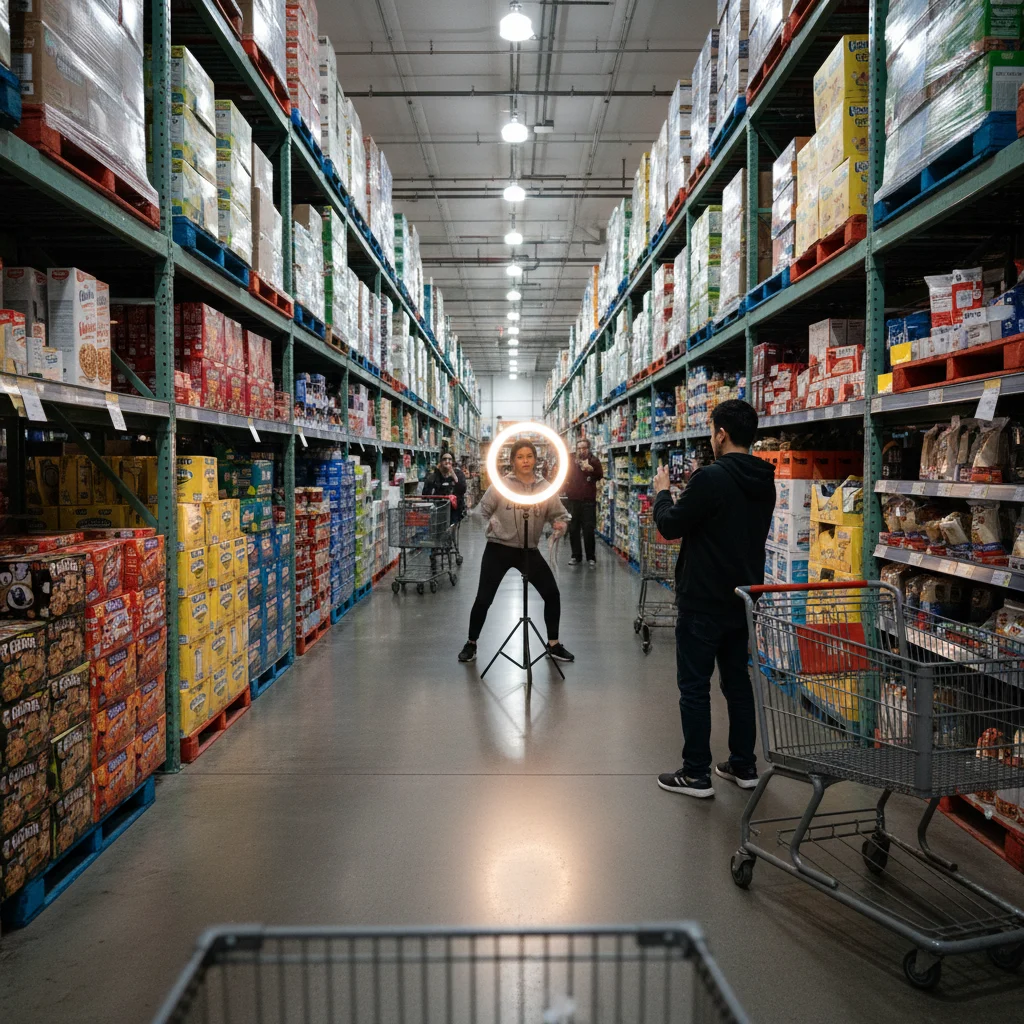
A routine trip to buy paper towels and bulk chicken breasts is turning into an obstacle course for warehouse club members across the country. Over recent months, shoppers navigating the wide concrete aisles of Costco have found themselves dodging ring lights, stepping around portable tripods, and waiting out choreographed dance routines staged in front of bakery racks.
Now, retail insiders report that Costco Wholesale Corporation is reviewing its nationwide policies regarding in-store video recording. The warehouse giant is weighing stricter, more uniform enforcement to curb disruptive social media stunts before member irritation boils over into lost renewals.
From Grocery Run to Social Media Studio
Warehouse stores provide an unusual allure for content creators. The soaring industrial shelving, oversized products, and bright overhead lights offer a distinctive visual aesthetic for TikTok clips, YouTube shorts, and Instagram reels. Over the past year, several viral formats have taken root inside the chain.
Some creators stage synchronized group dances directly in high-traffic corridors. Others broadcast live shopping sprees, perform food court taste tests with bulky microphone setups, or stage elaborate pranks on unsuspecting bystanders. In some cases, influencers set up multiple cameras to capture candid reactions from shoppers who simply wanted to grab a package of muffins.
While quick smartphone photos of product prices or family grocery lists have long been normal, full-scale video production creates friction. Shoppers pushing heavy 40-pound flatbed carts often find their paths blocked by creators who demand retakes or request that people stay out of the camera frame.
Member Complaints and Safety Concerns
Customer patience is wearing thin. Online forums and member groups have seen a steady rise in complaints from frequent Costco visitors who feel their privacy and shopping experience are being compromised.
For many, the primary issue is consent. Big-box shoppers do not expect to end up in the background of a monetized video seen by millions online. Parents have raised concerns about their children inadvertently appearing in viral feeds simply because they walked down the snack aisle.
Safety presents an even sharper issue. Unlike traditional supermarkets, Costco operates working warehouse floors where staff routinely move heavy pallets, operate electric pallet jacks, and manage massive product displays. When creators block sightlines or distract shoppers and employees around heavy equipment, the risk of accidents climbs.
“It is an active warehouse, not a film set,” said one long-time member from suburban Chicago. “You are already maneuvering around massive shopping carts and forklift barriers. Adding teenagers setting up tripods to film synchronized routines near the dairy cooler makes an already crowded Saturday run completely unbearable.”
What the Membership Agreement Actually Says
Like most private retail establishments, Costco properties are private spaces open only to paid members and their guests. The company has always maintained broad authority over member conduct inside its warehouses.
Standard membership terms grant Costco the right to revoke access for disruptive behavior or failure to comply with warehouse policies. Historically, the retailer has maintained a general ban on unauthorized commercial photography and filming. However, enforcement has largely been left to individual store managers, leading to inconsistent application across different regions.
Under the proposed adjustments being reviewed by corporate management, warehouses would receive clearer, standardized directives. While casual personal photos and brief clips will likely remain untouched, staff would be instructed to immediately intervene whenever members deploy professional gear, such as:
- Freestanding tripods, gimbals, and monopod extensions
- External microphones and separate lighting rigs
- Prolonged stationary recording that impedes foot traffic
- Filming that captures other members or employees without explicit permission
- Commercial promotional shoots conducted without corporate press approval
A Broader Pushback Across the Retail Sector
Costco is far from the only business grappling with the realities of the creator economy. Gym chains, theme parks, and department stores have all had to redraw their boundaries as smartphone video culture expands.
Planet Fitness and other major health club operators recently clamped down on tripod use in workout areas to protect member privacy in locker rooms and weight floors. Major theme parks, including Disney properties, banned selfie sticks years ago over ride safety issues and now monitor live streamers whose commentary disturbs other visitors. Similarly, high-end department stores and boutique grocers have increasingly asked video creators to leave if their filming interferes with normal commerce.
For Costco, maintaining member satisfaction is directly tied to its core business model. The bulk retailer generates the vast majority of its operating profit not from product markups, but from annual membership fees. If long-term members feel that visiting a local store has become chaotic or intrusive, renewal rates could suffer.
Balancing Free Marketing with Member Comfort
The situation puts retail marketers in a tricky spot. Viral content about new Costco items—from viral dessert finds to seasonal patio furniture—often drives massive sales spikes at zero direct advertising cost to the brand. Many products sell out nationwide within days after catching fire on social media.
Yet, warehouse leadership recognizes that organic product excitement does not require full-blown musical numbers in the middle of aisle five. Industry analysts suggest that clear guidelines will help preserve the promotional upside of user-generated content while eliminating the most obnoxious behaviors.
What Shoppers Can Expect Next
Shoppers visiting warehouses in the coming months may notice increased signage near store entrances reminding patrons of personal recording rules. Floor managers and door staff are expected to take a more proactive approach, asking creators to put away stands or end live broadcasts if complaints arise.
For the average customer snapping a quick picture of a price tag to check with a spouse at home, nothing will change. But for creators hoping to turn the frozen food section into their personal dance studio, the days of unrestricted warehouse filming appear to be numbered.
