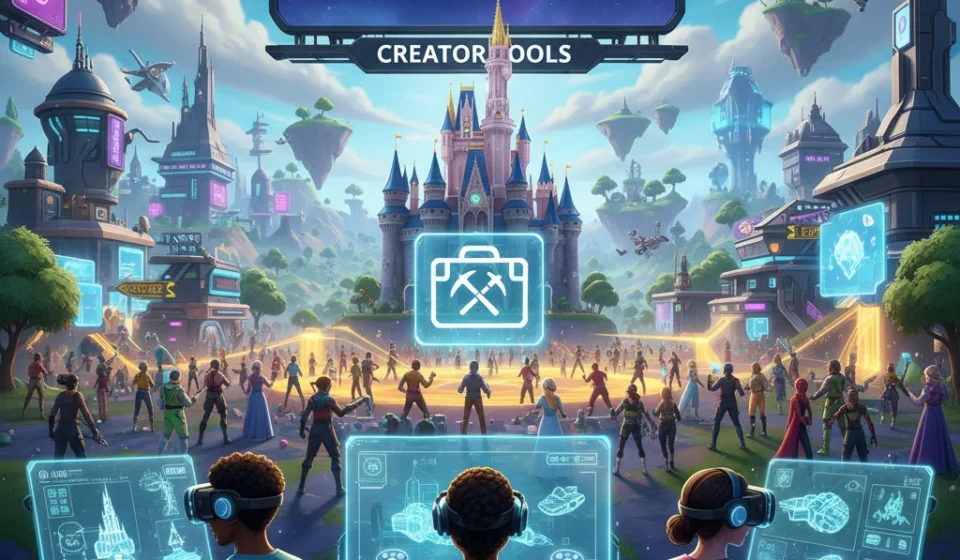

Fortnite has always been a digital sandbox, but its latest update turns the keys over to players in a way we have never seen before. With the launch of Chapter 7, Epic Games has officially deployed its highly anticipated Disney Universe integration. It is the first major fruit of Disney’s $1.5 billion investment in Epic, and it gives creators unprecedented access to some of the world’s most valuable entertainment franchises.
For the first time, independent developers and players using the Unreal Editor for Fortnite (UEFN) can build and publish their own games using official Disney, Marvel, and Star Wars assets. Want to design a high-stakes trench run in a custom X-Wing? Or maybe a multiplayer arena where players fight using Iron Man repulsors and Captain America shields? Now, you can.
“This is about giving players the tools to build the next generation of Disney experiences,” said Josh D’Amaro, chairman of Disney Experiences. “We are not just putting our characters into Fortnite. We are letting the community build the future of play alongside us.”
New Rules for Famous Characters
The rollout marks a major shift in how Hollywood interacts with user-generated content. Typically, companies like Disney guard their intellectual property with armies of lawyers. Letting teenagers in their bedrooms program custom Star Wars missions is a radical departure from traditional branding strategies.
However, this creative freedom comes with strict rules. Epic Games has established a complex set of brand guidelines to keep Disney’s family-friendly image intact. Creators cannot mix certain franchises in ways that violate brand standards, and violent gameplay elements are heavily restricted for specific characters. For instance, you will not see classic cartoon characters running around with realistic military rifles. The creative suite uses smart asset blocking to ensure that creators stay within these guardrails.
“We’ve built a system that respects the integrity of these beloved worlds while still giving creators incredible freedom,” explained Epic Games CEO Tim Sweeney. “It’s a delicate balance, but the potential is limitless.”
The Creator Economy Gets a Major Boost
The economic stakes are massive. Under Epic’s existing Creator Economy 2.0 model, developers receive a share of Fortnite’s revenue based on how many people play their custom islands. By giving these creators access to powerhouse brands, Epic is essentially handing them the ultimate tools for driving player engagement. If a fan-made Avengers mini-game goes viral, the creator stands to make a life-changing amount of money.
Already, the early numbers are turning heads. Within forty-eight hours of the Chapter 7 launch, several fan-made Star Wars simulators racked up millions of play hours. Epic’s public dashboards show a massive surge in active creator accounts, suggesting that the allure of working with official Disney assets has drawn older, more experienced developers back into the Fortnite ecosystem.
To support this influx of talent, Epic released a suite of new templates within UEFN. These templates act as starter kits, offering pre-configured physics for space flight, superhero combat mechanics, and custom lighting profiles that mimic classic Disney film aesthetics. Creators do not have to build a flying vehicle from scratch; they can take a base model, skin it with Star Wars geometry, and tweak the speed variables.
Democratizing Game Development
This makes the tools incredibly accessible. A teenager with zero coding experience can watch a few tutorials and have a playable, Disney-themed level ready in a weekend. Meanwhile, professional indie studios are using the same systems to build highly polished, episodic adventures. For many young designers, this is an entry point into the gaming industry. Building a portfolio with official Disney assets is a resume builder that was unimaginable a decade ago.
Regular players who do not build games will still see an immediate impact. The Fortnite discover page is already filling up with custom-built Disney content. Alongside standard Battle Royale matches, players can jump into narrative-driven Star Wars campaigns, Marvel-themed obstacle courses, and cozy Pixar-inspired social spaces.
The integration represents a significant step toward Epic’s ultimate goal of a sprawling, interconnected virtual world. While other tech companies have abandoned their virtual dreams, Epic and Disney are doubling down. They are building a digital theme park where players do not just watch stories—they live in them, modify them, and own them.
As Chapter 7 rolls on, the community’s reaction will shape the future of this partnership. If these user-generated worlds succeed, they could rewrite the playbook for how entertainment giants share their toys. For now, the sandbox is open, the lightsabers are active, and the next great Disney adventure is being coded in a bedroom somewhere right now.