

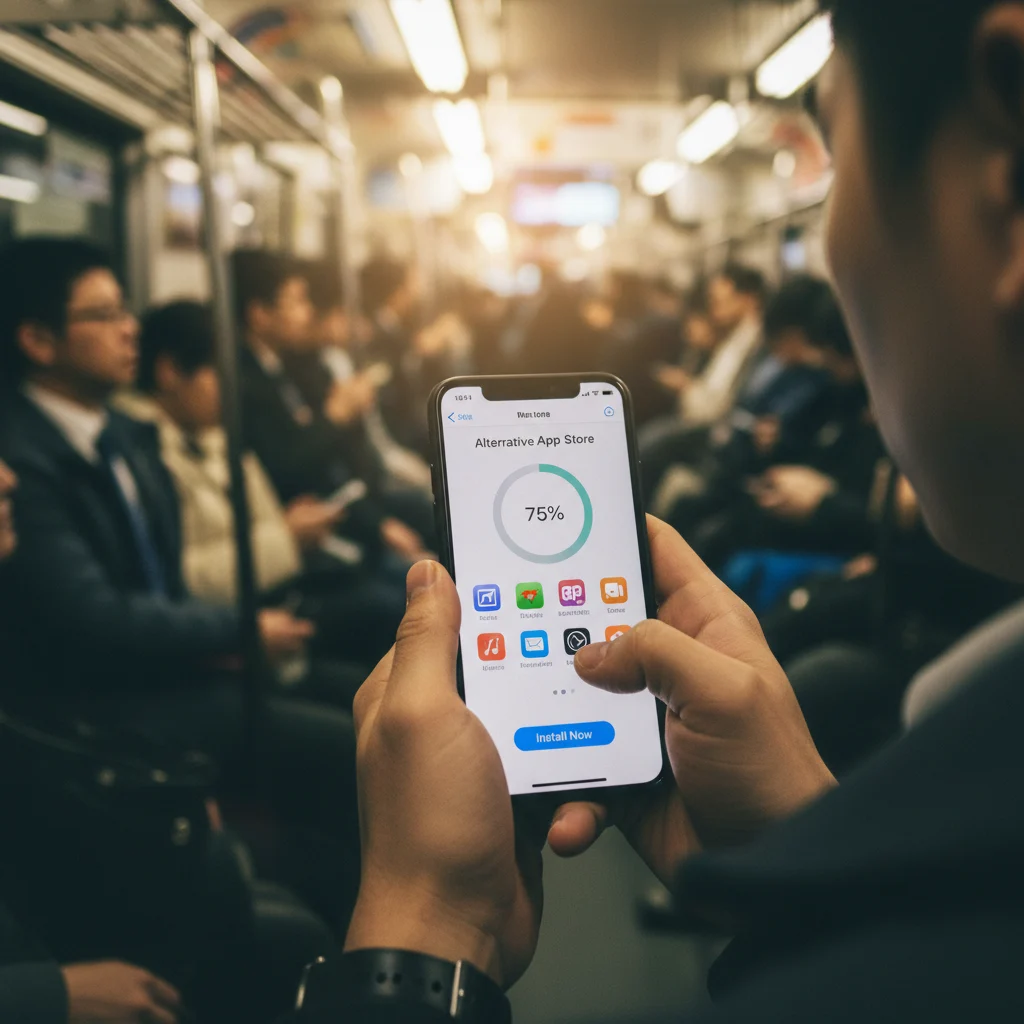
Fortnite is making its way back to iPhones in Japan. Epic Games recently announced plans to launch its dedicated digital storefront on iOS devices in the country, marking its first major expansion outside the European Union. This move leverages brand-new local antitrust legislation designed to break Apple’s tight grip on mobile software distribution.
Japan’s New Regulatory Push
The transition is made possible by Japan’s newly enacted monopoly laws. In June, the country’s parliament passed the Act on Promotion of Competition for Specified Government Software. This legislation, which closely mirrors the European Union’s Digital Markets Act, is scheduled to take full effect by late 2025 or early 2026.
The law targets tech giants like Apple and Google. It forces them to allow third-party app stores on their operating systems and permits developers to use alternative payment processors. Violators face hefty fines, sometimes reaching up to 20% of their domestic revenue. For Epic, this legal shift opened the exact door they had been fighting to unlock for years.
The Return of Fortnite
Epic Games confirmed it is actively preparing to launch the Epic Games Store on iOS in Japan as soon as the law permits. This means Japanese iPhone users will finally be able to download Fortnite directly through Epic’s marketplace. The game has been unavailable on iOS devices in Japan since 2020.
Japan represents a massive, highly lucrative market for mobile gaming. Players there are famously enthusiastic about battle royale titles and free-to-play multiplayer games. Losing access to iOS users in the country was a major blow to Epic’s global player base. Reclaiming this territory is a huge milestone for the North Carolina-based developer.
A Long-Running Feud
The bad blood between Epic and Apple started in August 2020. Epic introduced a direct payment system inside Fortnite, bypassing Apple’s 30% cut of in-app purchases. Apple responded immediately by kicking Fortnite off the App Store. A bitter, years-long legal battle in the United States followed, with courts largely ruling that Apple’s rules did not violate federal antitrust laws, though they did strike down some anti-steering provisions.
Epic changed its strategy. Instead of relying purely on U.S. courts, the company began lobbying governments worldwide to pass legislation that would force Apple’s hand. The strategy paid off first in Europe, where the Digital Markets Act went into effect earlier this year. In August 2024, Epic launched its games store on iOS in the EU, bringing Fortnite back to European iPhones. Japan is now the second major battlefield where Epic’s lobbying and political pressure have yielded concrete results.
The Cost of Doing Business
While the new law forces Apple to open up, the tech giant is unlikely to make it easy. In Europe, Apple introduced new fees, including a ‘Core Technology Fee’ of €0.50 per annual install after a certain threshold. Epic Games CEO Tim Sweeney has publicly criticized these fees, calling them malicious compliance designed to discourage competition.
It remains to be seen what kinds of fees Apple will try to introduce under Japan’s new regulatory regime. Epic is banking on Japanese regulators keeping a close eye on Apple’s implementation policies. Japanese officials have indicated they will monitor tech platforms closely to ensure they comply with the spirit of the new competition law, not just the letter.
What Lies Ahead
Other companies are watching Epic’s moves closely. If Epic successfully establishes a profitable, independent store on iOS in Japan, other major gaming companies might follow suit. Microsoft has already expressed interest in launching its own mobile Xbox store, and various Japanese publishers could see this as a way to escape Apple’s hefty commission fees.
For now, Japanese gamers will have to wait a bit longer. The precise release date for the Epic Games Store on iOS in Japan remains tied to the official enforcement date of the new antitrust law. However, Epic’s early announcement sends a clear signal: the era of the single-gatekeeper mobile ecosystem is quickly coming to an end.