
Pushing Mobile Hardware to the Absolute Limit
Apple’s newly released iPhone 18 Pro is here, and it is already shaking up the mobile gaming space. Epic Games has announced a major technical overhaul for Fortnite Mobile, specifically tailored to squeeze every ounce of performance out of Apple’s new A20 Pro silicon. This isn’t just another minor stability patch. It’s a ground-up optimization effort designed to bring desktop-class graphics straight to your pocket.
At the heart of this upgrade are two massive features: native 120 frames per second (FPS) gameplay and hardware-accelerated ray tracing. While high refresh rates aren’t entirely new to mobile gaming, maintaining a locked 120 FPS alongside high-fidelity graphics has long been the holy grail for mobile developers. Epic claims the power of the A20 Pro chip makes this a reality without the aggressive resolution downscaling that plagued previous iPhone generations.
The Power of the A20 Pro Silicon
The A20 Pro chip features an upgraded GPU architecture that handles complex lighting calculations directly on the hardware level. Epic’s engineering team has tapped into this capability to introduce true ray-traced reflections, shadows, and ambient occlusion. Previously, these effects had to be simulated using software tricks, which often looked flat or drained the battery in minutes.
“We wanted Fortnite on the iPhone 18 Pro to feel like you’re playing on a dedicated gaming console, not a compromised mobile port,” says Mark Rein, Vice President of Epic Games. “The hardware-accelerated ray tracing on the A20 Pro allows us to render dynamic lighting that reacts instantly to player actions. When you build a metal wall or blow up a structure, the reflections and shadows shift dynamically in real-time. It’s incredibly immersive.”
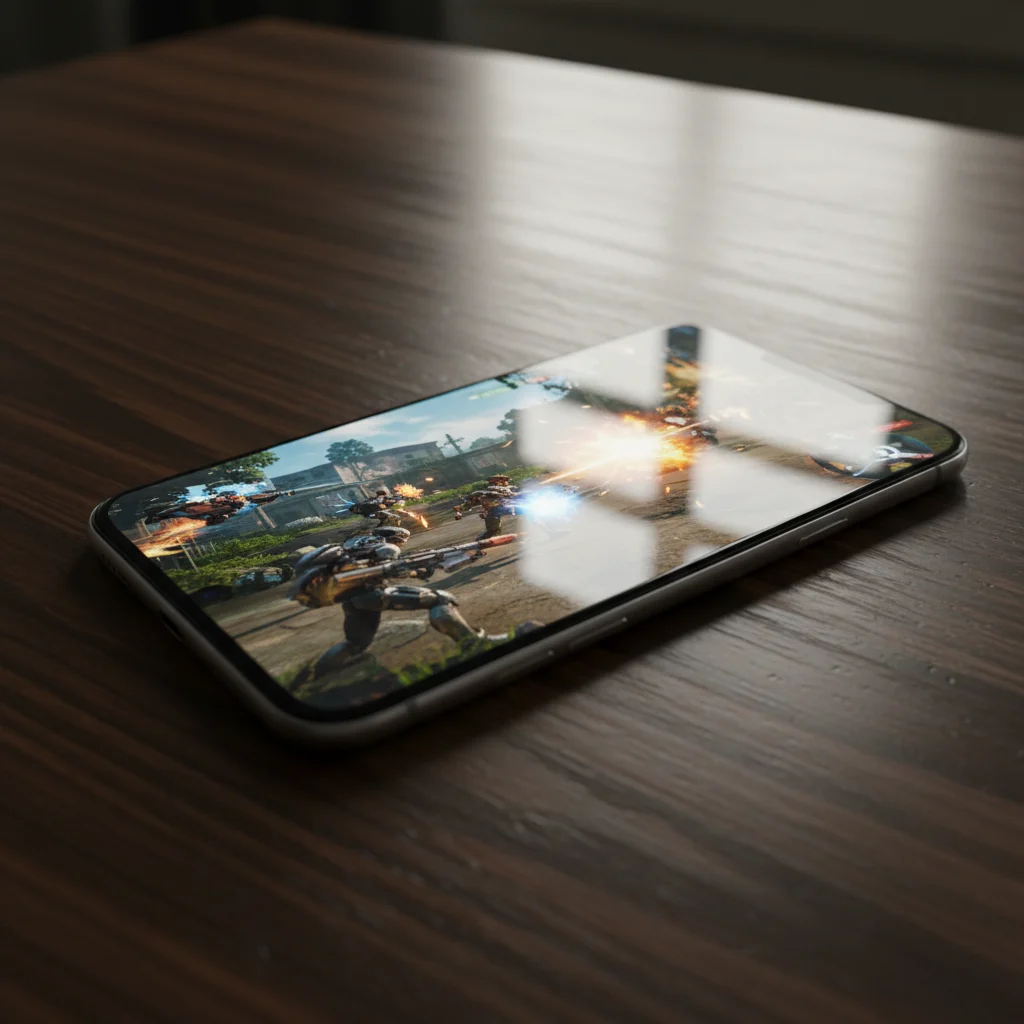
Achieving this level of visual fidelity requires massive processing power. To prevent the iPhone 18 Pro from overheating and thermal throttling during intense battle royale matches, Epic worked on a dynamic resolution scaling system. This system subtly adjusts the rendering resolution during chaotic, particle-heavy fights, ensuring the frame rate never dips below the targeted 120 FPS threshold.
A New Era for Competitive Mobile Players
For competitive players, the leap to a stable 120 FPS is a massive deal. In fast-paced shooters like Fortnite, milliseconds matter. The doubled frame rate compared to standard 60 Hz screens dramatically reduces input latency, making building, editing, and aiming feel instantaneous. Combined with the improved touch response rate of the iPhone 18 Pro’s screen, mobile players will have a distinct advantage in cross-play lobbies.
However, running a game with ray tracing and high frame rates simultaneously is a notorious battery killer. Epic has addressed this by introducing granular graphics settings. Players can choose to run the game in “Performance Mode,” which prioritizes a locked 120 FPS with minimal visual flair, or “Epic Mode,” which enables ray tracing at a stable 60 FPS. For those who want the best of both worlds, a hybrid setting allows the phone to dynamically adjust features based on current battery levels and device temperature.
Behind the Scenes of the Epic-Apple Relationship
This technical milestone comes at an interesting time for both companies. After years of legal battles over App Store fees and distribution rights, Epic Games has steadily clawed its way back onto iOS devices, particularly in the European Union through the Epic Games Store. This new update demonstrates that despite past courtroom drama, Epic is still highly committed to delivering a premium experience on Apple’s flagship hardware.
The update is scheduled to roll out globally over the coming weeks, coinciding with the official retail release of the iPhone 18 Pro. Gamers eager to test their new devices can download the patch directly through the Epic Games app or compatible regional marketplaces. It remains to be seen how the battery life holds up under sustained load, but one thing is clear: the gap between mobile and console gaming has never been smaller.
