
A Mosaic of Realities
News never stops moving. In Gujarat, the stories currently capturing public attention are a mix of profound historical struggles, sudden flashes of violence, and the quiet, persistent crises of daily survival. From tribal communities celebrating a delayed freedom to families broken by a lack of justice, the current state of affairs reveals deep social complexities. It is a world where ancient traditions exist side by side with modern-day battles in the courtroom and on the streets.
The Long Fight for Dignity: Gujarat’s Nomadic Tribes
Take August 31. To most people, India’s Independence Day is August 15. But for a large group of nomadic, semi-nomadic, and de-notified tribes in Gujarat, their true liberation came much later. They call August 31 their “Second Independence Day.”
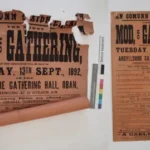
Under British colonial rule, these communities suffered under a cruel piece of legislation called the Criminal Tribes Act. Entire families were branded as criminals by birth. They were forced to live in restricted, monitored areas under constant suspicion. Even after the British left in 1947, the legacy of that classification lingered. The formal repeal of the act happened on August 31, 1952. For these communities, this date marks the moment they were finally recognized as free citizens. Decades later, they still gather every year on this day to remember their struggle and demand the social integration they are still fighting for.
Systemic Despair and the Tragedy of Thangadh
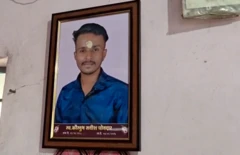
But history’s wounds do not heal easily, especially when justice remains elusive. In late August, a tragic event shook Surendranagar district. Amarshi Sumra, a father who spent 14 years fighting for justice for his son, ended his life by stepping in front of a train on August 26. His 16-year-old son, Pankaj Sumra, was killed in 2012 during the infamous Thangadh police firing. For over a decade, Amarshi tried every legal and social avenue to hold those responsible accountable. His family says the exhaustion of the fight finally broke him. It is a grim reminder of how slow the wheels of justice can turn, sometimes crushing the very people they are meant to protect.
Meanwhile, another alarming trend has forced police to investigate deeper societal issues. Following reports that 29 men had died by suicide due to their inability to get married, law enforcement looked closer. The truth, as it often does, turned out to be much more complicated than a single headline. Investigators found a web of overlapping crises. It was not just about finding a partner. These men were struggling with severe depression, drug addiction, massive financial debts, and intense family pressure.
Swift Justice in Vadodara
When the system does move quickly, however, it sends a powerful message. The city of Vadodara recently saw swift legal action in the shocking Bhayli gang rape case. On October 4, 2024, during the Navratri festival, a 16-year-old girl and her male friend were in an isolated spot in Bhayli. A group of five men cornered them, beat the friend, held him hostage, and assaulted the teenager. The outrage was immediate. The police acted fast, and the courts did not drag their feet. All five men involved were handed life sentences. For a community tired of endless delays in sexual assault trials, this verdict was a rare moment of swift accountability.
National Shifts and Religious Identity
On a national level, identity and politics continue to clash. Recently, Mohan Bhagwat, the head of the Rashtriya Swayamsevak Sangh (RSS), made waves during a speech at a conference in New York. Addressing the global diaspora, he made a direct statement about religious coexistence. Bhagwat declared that any Hindu who believes Muslims should be driven out of India cannot truly be considered a Hindu. His comments come at a highly sensitive time, as debates over majoritarianism and national identity remain highly polarized.
At the same time, the battle lines over affirmative action are being redrawn. In Delhi, the iconic protest site of Jantar Mantar has become a pressure cooker. Just days after groups gathered to defend reservation policies—shouting “Jai Bhim” and invoking the legacy of Dr. B.R. Ambedkar—another crowd gathered at the exact same spot to demand the complete removal of the reservation system. The Bharatiya Janata Party (BJP) finds itself in a delicate position, trying to balance these competing demands without alienating crucial voter bases.
Kutch Drought and Rural Oddities
Away from the political arenas of Delhi and the courtrooms of Vadodara, environmental concerns are threatening livelihoods. In the arid region of Kutch, the whispers of drought are growing louder. Local dairy farmers are facing a severe crisis. Milk production is dropping because water is scarce, and the cost of fodder has skyrocketed to nearly three times its usual price. For many in Kutch, cattle are not just animals; they are the sole source of income.
But human interest stories are not all dark. Some are bizarre enough to make you look twice. In Bihar, a dispute over a single buffalo escalated to the point where the police actually ordered a DNA test. Two different farmers claimed ownership of the animal. With local tensions rising, the regional Inspector General of Police, Vikas Vaibhav, ordered a scientific test to settle the matter once and for all. It is a quirky reminder of how high stakes can be in rural India over agricultural assets.
A Connected World
Global events also filter down to the local consciousness. News reached India of the death of Ratko Mladić, the notorious “Butcher of Bosnia,” who died at the age of 84. Known for orchestrating some of the worst atrocities in Europe since World War II, his passing marks the end of a dark chapter in global history.
Back in the Himalayas, nature is showing its raw power again. Nepal is bracing for more floods. In Rasuwa, the Bhote Koshi river is rising fast, prompting warnings from disaster authorities. Up to 1,000 workers, including 40 Indians, found themselves stranded in tunnels near the Chinese border as landslides and rising waters cut off access.
From the dry plains of Kutch to the rain-soaked gorges of Nepal, the stories of the day reflect a restless world. Some are fighting for basic survival, others for political recognition, and some for a sense of peace that seems increasingly hard to find.